This post is a follow-up to my previous essay on reducing suffering given long-term cluelessness. Long-term cluelessness is the idea that we have no clue which actions are likely to create better or worse consequences across the long-term future. In my previous post, I argued that even if we grant long-term cluelessness (a premise I remain skeptical of), we can still steer by purely consequentialist views that do not entail cluelessness and that can ground a focus on effective suffering reduction.
In this post, I will outline an alternative approach centered on virtues. I argue that even if we reject or find no guidance in any consequentialist view, we can still plausibly adopt a virtue-based approach to reducing suffering, including effective suffering reduction. Such an approach can help guide us independently of consequentialist uncertainty.
It can be difficult to say exactly what a virtue-based approach to reducing suffering would entail. Indeed, an absence of clear and simple rules, and responding wisely in conditions of ambiguity based on good practical judgment, are all typical features of virtue-based approaches in ethics.
That said, in the broadest terms, a virtue-based approach to suffering involves having morally appropriate attitudes, sentiments, thoughts, and behaviors toward suffering. It involves relating to suffering in the way that a morally virtuous person would relate to it.
Perhaps more straightforwardly, we can say what a virtue-based approach would definitely not involve. For example, it would obviously not involve extreme vices like sadism or cruelty, nor would it involve more common yet still serious vices like being indifferent or passive in the face of suffering.
However, a virtue-based approach would not merely involve the morally unambitious aim of avoiding serious vices. It would usually be much more ambitious than that, encouraging us to aim for moral excellence across all aspects of our character — having deep sympathy and compassion, striving to be proactively helpful, having high integrity, and so on.
In this way, a virtue-based approach may invert an intuitive assumption about the implications of cluelessness. That is, rather than seeing cluelessness as a devastating consideration that potentially opens the floodgates to immoral or insensitive behavior, we can instead see it as paving the way for a focus on moral excellence. After all, if no consequentialist reasons count against a strong focus on moral excellence under assumed cluelessness, then arguably the strongest objections against such a focus fall away. As a result, we might no longer have any plausible reason not to pursue moral excellence in our character and conduct. At a minimum, we would no longer have any convenient consequentialist-framed rationalizations for our vices.
Sure, we could retreat to simply being insensitive and disengaged in the face of suffering — or even retreat to much worse vices — but I will argue that those options are less plausible.
Justifications for a virtue-based approach
There are various possible justifications for the approach outlined above. For example, one justification might be that having excellent moral character simply reflects the kind of person we ideally want to be. For some of us, such a personal desire might in itself be a sufficient reason for adopting a virtue-based approach in some form.
Complementary justifications may derive from our moral intuitions. For instance, all else equal, we might find it intuitive that it is morally preferable to embody excellent moral character than to embody serious vices, or that it is more ethical to display basic moral virtues than to lack such virtues (see also Knutsson, 2023, sec. 7.4). (Note that this differs from the justification above in that we need not personally want to be virtuous in order to have the intuition that it is more ethical to be that way.)
We may also find some justification in contractualist considerations or considerations about what kind of society we would like to live in. For example, we may ideally want to live in a society in which people adhere to virtues of compassion and care for suffering, as well as virtues of effectiveness in reducing suffering (more on this in the next section). Under contractualist-style moral frameworks, favoring such a society would in turn give us moral reason to adhere to those virtues ourselves.
A virtue-based approach might likewise find support if we consider specific cases. For example, imagine that you are a powerful war general whose soldiers are committing heinous atrocities that you have the power to stop — with senseless torture occurring on a large scale that you can halt immediately. And imagine that, given your subjective beliefs, your otherwise favored moral views all fail to give any guidance in this situation (e.g. due to uncertainty about long-term consequences). In contrast, ending the torture would obviously be endorsed by any commonsense virtue-based stance, since that is simply what a virtuous, compassionate person would do regardless of long-term uncertainty. If we agree that ending the torture is the morally right response in a case like this, then this arguably lends some support to such a virtue-based stance (as well as to other moral stances that imply the same response).
In general terms, we may endorse a virtue-based approach partly because it provides an additional moral safety net that we can fall back on when other approaches fail. That is, even if we find it most plausible to rely on other views when these provide practical recommendations, we might still find it reasonable to rely on virtue-based approaches in case those other views fall silent. Having virtue ethics as such a supportive layer can help strengthen our foundation and robustness as moral agents.
(One could also attempt to justify a virtue-based approach by appealing to consequentialist reasoning. Indeed, it could be that promoting a non-consequentialist virtue-based stance would ultimately create better consequences than not doing so. For example, the absence of such a virtue-based stance might increase the risk of extremely harmful behavior among moral agents. However, such arguments would involve premises that are not the focus of this post.)
A virtue-based approach to effective suffering reduction
One might wonder whether a virtue-based approach can ground effective suffering reduction of any kind. That is, can a virtue-based approach ground systematic efforts to reduce suffering effectively with our limited resources? In short, yes. If one deems it virtuous to try to reduce suffering in systematic and effective ways (at least in certain decisions or domains), then a virtue-based approach could provide a moral foundation for such efforts.
For instance, if given a choice between saving 10 versus 1,000 chickens from being boiled alive, we may consider it more virtuous — more compassionate and principled — to save the 1,000, even if we had no idea whether that choice ultimately reduces more suffering across all time or across all consequences that we could potentially assess.
To take a more realistic example: in a choice between donating either to a random charity or to a charity with a strong track record of preventing suffering, we might consider it more virtuous to support the latter, even if we do not know the ultimate consequences.
How would such a virtue-based approach be different from a consequentialist approach? Broadly speaking, there can be two kinds of differences. First, a virtue-based approach might differ from a consequentialist one in terms of its practical implications. For instance, in the donation example above, a virtue-based approach might recommend that we donate to the charity with a track record of suffering prevention even if we are unable to say whether it reduces suffering across all time or across all consequences that we could potentially assess.
Second, even if a virtue-based view had all the same practical implications as some consequentialist view, there would still be a difference in the underlying normative grounding or basis of these respective views. The consequentialist view would be grounded purely in the value of consequences, whereas the virtue-based view would not be grounded purely in that (even if the disvalue of suffering may generally be regarded as the most important consideration). Instead, the virtue-based approach would (also) be grounded at least partly in the kind of person it is morally appropriate to be — the kind of person who embodies a principled and judicious compassion, among other virtues (see e.g. the opening summary in Hursthouse & Pettigrove, 2003).
In short, virtue-based views represent a distinctive way in which some version of effective suffering reduction can be grounded.
Conclusion
There are many possible moral foundations for reducing suffering (see e.g. Vinding, 2020, ch. 6; Knutsson & Vinding, 2024, sec. 2). Even if we find one particular foundation to be most plausible by far, we are not forced to rest absolutely everything on such a singular and potentially brittle basis. Instead, we can adopt many complementary foundations and approaches, including an approach centered on excellent moral character that can guide us when other frameworks might fail. I think that is a wiser approach.
An objection against trying to reduce suffering is that we cannot predict whether our actions will reduce or increase suffering in the long term. Relatedly, some have argued that we are clueless about the effects that any realistic action would have on total welfare, and this cluelessness, it has been claimed, undermines our reason to help others in effective ways. For example, DiGiovanni (2025) writes: “if my arguments [about cluelessness] hold up, our reason to work on EA causes is undermined.”
There is a grain of truth in these claims: we face enormous uncertainty when trying to reduce suffering on a large scale. Of course, whether we are bound to be completely clueless about the net effects of any action is a much stronger and more controversial claim (and one that I am not convinced of). Yet my goal here is not to discuss the plausibility of this claim. Rather, my goal is to explore the implications if we assume that we are bound to be clueless about whether any given action overall reduces or increases suffering.
In other words, without taking a position on the conditional premise, what would be the practical implications if such cluelessness were unavoidable? Specifically, would this undermine the project of reducing suffering in effective ways? I will argue not. Even if we grant complete cluelessness and thus grant that certain moral views provide no practical recommendations, we can still reasonably give non-zero weight to other moral views that do provide practical recommendations. Indeed, we can find meaningful practical recommendations even if we hold a purely consequentialist view that is exclusively concerned with reducing suffering.
A potential approach: Giving weight to scope-adjusted views
There might be many ways to ground a reasonable focus on effective suffering reduction even if we assume complete cluelessness about long-term consequences. Here, I will merely outline one candidate option, or class of options, that strikes me as fairly reasonable.
As a way to introduce this approach, say that we fully accept consequentialism in some form (notwithstanding various arguments against being a pure consequentialist, e.g. Knutsson, 2023; Vinding, 2023). Yet despite being fully convinced of consequentialism, we are uncertain or divided about which version of consequentialism is most plausible.
In particular, while we give most weight to forms of consequentialism that entail no restrictions or discounts in its scope, we also give some weight to views that entail a more focused scope. (Note that this kind of approach need not be framed in terms of moral uncertainty, which is just one possible way to frame it. An alternative is to think in terms of degrees of acceptance or levels of agreement with these respective views, cf. Knutsson, 2023, sec. 6.6.)
To illustrate with some specific numbers, say that we give 95 percent credence to consequentialism without scope limitations or adjustments of any kind, and 5 percent credence to some form of scope-adjusted consequentialism. The latter view may be construed such that its scope roughly includes those consequences we can realistically estimate and influence without being clueless. This view is similar to what has been called “reasonable consequentialism”, the view that “an action is morally right if and only if it has the best reasonably expected consequences.” It is also similar to versions of consequentialism that are framed in terms of foreseeable or reasonably foreseeable consequences (Sinnott-Armstrong, 2003, sec. 4).
To be clear, the approach I am exploring here is not committed to any particular scope-adjusted view. The deeper point is simply that we can give non-zero weight to one or more scope-adjusted versions of consequentialism, or to scope-adjusted consequentialist components of a broader moral view. Exploring which scope-adjusted view or views might be most plausible is beyond the aims of this essay, and that question arguably warrants deeper exploration.
That being said, I will mostly focus on views centered on (something like) consequences we can realistically assess and be guided by, since something in this ballpark seems like a relatively plausible candidate for scope-adjustment. I acknowledge that there are significant challenges in clarifying the exact nature of this scope, which is likely to remain an open problem subject to continual refinement. After all, the scope of assessable consequences may grow as our knowledge and predictive power grow.
Asymmetry in practical recommendations
The relevance of the approach outlined above becomes apparent when we evaluate the practical recommendations of the clueless versus non-clueless views incorporated in this approach. A completely clueless consequentialist view would give us no recommendations about how to act, whereas a non-clueless scope-adjusted view would give us practical recommendations. (It would do so by construction if its scope includes those consequences we can realistically estimate and influence without being clueless.)
In other words, the resulting matrix of recommendations from those respective views is that the non-clueless view gives us substantive guidance, while the clueless view suggests no alternative and hence has nothing to add to those recommendations. Thus, if we hold something like the 95/5 combined consequentialist view described above — or indeed any non-zero split between these component views — it seems that we have reason to follow the non-clueless view, all things considered.
Toy models
To give a sense of what a scope-adjusted view might look like, we can consider a toy model with an exponential discount factor and an (otherwise) expected linear increase in population size:
The green area represents 99 percent of the total expected value we can influence under this view, implying that almost all the value we can meaningfully influence is found within the next 700 years.
We can also consider a model with a different discount factor and with cubic growth, reflecting the possibility of space expansion radiating from Earth:
On this model, virtually all the expected value we can meaningfully influence is found within the next 10,000 years. In both of the models above, we end up with a sort of de facto “medium-termism”.
Of course, one can vary the parameters in numerous ways and combine multiple models in ways that reflect more sophisticated views of, for example, expected future populations and discount factors. Views that involve temporal discounting allow for much greater variation than what is captured by the toy models above, including views that focus on much shorter or much longer timescales. Moreover, views that involve discounting need not be limited to temporal discounting in particular, or even be phrased in terms of temporal discounting at all. It is one way to incorporate discounting or scope-adjustments, but by no means the only one.
Furthermore, if we give some plausibility to views that involve discounting of some kind, we need not be committed to a single view for every single domain. We may hold that the best view, or the view we give the greatest weight, will vary depending on the issue at hand (cf. Dancy, 2001; Knutsson, 2023, sec. 3). A reason for such variability may be that the scope of outcomes we can meaningfully predict often differs significantly across domains. For example, there is a stark difference in the predictability of weather systems versus planetary orbits, and similar differences in predictability might be found across various practical and policy-relevant domains.
Note also that a non-clueless scope-adjusted view need not be rigorously formalized; it could, for example, be phrased in terms of our all things considered assessments, which might be informed by myriad formal models, intuitions, considerations, and so on.
Justifications and motivations
What might justify or motivate the basic approach outlined above? This question can be broken into two sub-questions. First, why give weight to more than just a single moral view? Second, provided we give some weight to more than a single view, why give any weight to a scope-adjusted view concerned with consequences?
Why give weight to multiple views?
Reasons for giving weight to more than a single moral view or theory have been explored elsewhere (see e.g. Dancy, 2001; MacAskill et al., 2020, ch. 1; Knutsson, 2023; Vinding, 2023).
One of the reasons that have been given is that no single moral theory seems able to give satisfying answers to all moral questions (Dancy, 2001; Knutsson, 2023). And even if our preferred moral theory appears to be a plausible candidate for answering all moral questions, it is arguably still appropriate to have less than perfect confidence or acceptance in that theory (MacAskill et al., 2020, ch. 1; Vinding, 2023). Such moderation might be grounded in epistemic modesty and humility, a general skepticism toward fanaticism, and the prudence of diversifying one’s bets. It might also be grounded partly in the observation that other thoughtful people hold different moral views and that there is something to be said in favor of those views.
Likewise, giving exclusive weight to a single moral view might make us practically indifferent or paralyzed, whether it be due to cluelessness or due to underspecification as to what our preferred moral theory implies in some real-world situation. Critically, such practical indifference and paralysis may arise even in the face of the most extreme atrocities. If we find this to be an unreasonable practical implication, we arguably have reason not to give exclusive weight to a moral view that potentially implies such paralysis.
Finally, from a perspective that involves degrees of acceptance or agreement with moral views, a reason for giving weight to multiple views might simply be that those moral views each seem intuitively plausible or that we intuitively agree with them to some extent (cf. Knutsson, 2023, sec. 6.6).
Why give weight to a scope-adjusted view?
What reasons could be given for assigning weight to a scope-adjusted view in particular? One reason may be that it seems reasonable to be concerned with consequences to the extent that we can realistically estimate and be guided by them. That is arguably a sensible and intuitive scope for concern about consequences — or at least it appears sensible to some non-zero degree. If we hold this intuition, even if just to a small degree, it seems reasonable to have a final view in which we give some weight to a view focused on realistically assessable consequences (whatever the scope of those consequences ultimately turns out to be).
Some support may also be found in our moral assessments and stances toward local cases of suffering. For example, if we were confronted with an emergency situation in which some individuals were experiencing intense suffering in our immediate vicinity, and if we were readily able to alleviate this suffering, it would seem morally right to help these beings even if we cannot foresee the long-run consequences. (All theoretical and abstract talk aside, I suspect the vast majority of consequentialists would agree with that position in practice.)
Presumably, at least part of what would make such an intervention morally right is the badness of the suffering that we prevent by intervening. And if we hold that it is morally appropriate to intervene to reduce suffering in cases where we can immediately predict the consequences of doing so — namely that we alleviate the suffering right in front of us — it seems plausible to hold that this stance also generalizes to consequences that are less immediate. In other words, if this stance is sound in cases of immediate suffering prevention — or even if it just has some degree of soundness in such cases — it plausibly also has some degree of soundness when it comes to suffering prevention within a broader range of consequences that we can meaningfully estimate and influence.
This is also in line with the view that we have (at least somewhat) greater moral responsibility toward that which occurs within our local sphere of assessable influence. This view is related to, and may be justified in terms of, the “ought implies can” principle. After all, if we are bound to be clueless and unable to deliberately influence very long-run consequences, then, if we accept some version of the “ought implies can” principle, it seems that we cannot have any moral responsibility or moral duties to deliberately shape those long-run consequences — or at least such moral responsibility is plausibly diminished. In contrast, the “ought implies can” principle is perfectly consistent with moral responsibility within the scope of consequences that we realistically can estimate and deliberately influence in a meaningful way.
Thus, if we give some weight to an “ought implies can” conception of moral responsibility, this would seem to support the idea that we have (at least somewhat) greater moral responsibility toward that which occurs within our sphere of assessable influence. An alternative way to phrase it might be to say that our sphere of assessable influence is a special part of the universe for us, in that we are uniquely positioned to predict and steer events in that part compared to elsewhere, and this arguably gives us a (somewhat) special moral responsibility toward that part of the universe.
Another potential reason to give some weight to views centered on realistically assessable consequences, or more generally to views that entail discounting in some form, is that other sensible people endorse such views based on reasons that seem defensible to some degree. For example, it is common for economists to endorse models that involve temporal discounting, not just in descriptive models but also in prescriptive or normative models (see e.g. Arrow et al., 1996). The justifications for such discounting might be that our level of moral concern should be adjusted for uncertainty about whether there will be any future, uncertainty about our ability to deliberately influence the future, and the possibility that the future will be better able to take care of itself and its problems (relative to earlier problems that we could prioritize instead).
One might object that such reasons for discounting should be incorporated at a purely empirical level, without any discounting at the moral level, and I would largely agree with that sentiment. (Note that when applied at a strictly empirical or practical level, those reasons and adjustments are contenders as to how one might avoid paralysis without any discounting at the moral level.)
Yet even if we think such considerations should mostly or almost exclusively be applied at the empirical level, it might still be defensible to also invoke them to justify some measure of discounting directly at the level of one’s moral view and moral concerns, or at least as a tiny sub-component within one’s broader moral view. In other words, it might be defensible to allow empirical considerations of the kind listed above to inform and influence our fundamental moral values, at least to a small degree.
To be clear, it is not just some selection of economists who endorse normative discounting or scope-adjustment in some form. As noted above, it is also found among those who endorse “reasonable consequentialism” and consequentialism framed in terms of foreseeable consequences. And similar views can be found among people who seek to reduce suffering.
For example, Brian Tomasik has long endorsed a kind of split between reducing suffering effectively in the near term versus reducing suffering effectively across all time. In particular, regarding altruistic efforts and donations, he writes that “splitting is rational if you have more than one utility function”, and he devotes at least 40 percent of his resources toward short-term efforts to reduce suffering (Tomasik, 2015). Jesse Clifton seems to partially endorse a similar approach focused on reasons that we can realistically weigh up — an approach that in his view “probably implies restricting attention to near-term consequences” (see also Clifton, 2025). The views endorsed by Tomasik and Clifton explicitly give some degree of special weight to near-term or realistically assessable consequences, and these views and the judgments underlying them seem fairly defensible.
Lastly, it is worth emphasizing just how weak of a claim we are considering here. In particular, in the framework outlined above, all that is required for the simple practical asymmetry argument to go through is that we give any non-zero weight to a non-clueless view focused on realistically assessable consequences, or some other non-clueless view centered on consequences.
That is, we are not talking about accepting this as the most plausible view, or even as a moderately plausible view. Its role in the practical framework above is more that of a humble tiebreaker — a view that we can consult as an nth-best option if other views fail to give us guidance and if we give this kind of view just the slightest weight. And the totality of reasons listed here arguably justify that we grant it at least a tiny degree of plausibility or acceptance.
Arguments I have not made
One could argue that something akin to the approach outlined here would also be optimal for reducing suffering in expectation across all space and time. In particular, one could argue that such an unrestricted moral aim would in practice imply a focus on realistically assessable consequences. I am open to that argument — after all, it is difficult to see what else the recommended focus could be, to the extent there is one.
For similar reasons, one could argue that a practical focus on realistically assessable consequences represents a uniquely safe and reasonable bet from a consequentialist perspective: it is arguably the most plausible candidate for what a consequentialist view would recommend as a practical focus in any case, whether scope-adjusted or not. Thus, from our position of deep uncertainty — including uncertainty about whether we are bound to be clueless — it arguably makes convergent sense to try to estimate the furthest depths of assessable consequences and to seek to act on those estimates, at least to the extent that we are concerned with consequences.
Yet it is worth being clear that the argument I have made here does not rely on any of these claims or arguments. Indeed, it does not rely on any claims about what is optimal for reducing suffering across all space and time.
As suggested above, the conditional claim I have argued for here is ultimately a very weak one about giving minimal weight to what seems like a fairly moderate and in some ways commonsensical moral view or idea (e.g. it seems fairly commonsensical to be concerned with consequences to the extent that we can realistically estimate and be guided by them). The core argument presented in this essay does not require us to accept any controversial empirical positions.
Conclusion
For some of our problems, perhaps the best we can do is to find “second best solutions” — that is, solutions that do not satisfy all our preferred criteria, yet which are nevertheless better than any other realistic solution. This may also be true when it comes to reducing suffering in a potentially infinite universe. We might be in an unpredictable sea of infinite consequences that ripple outward forever (Schwitzgebel, 2024). But even if we are, this need not prevent us from trying to reduce suffering in effective and sensible ways within a realistic scope. After all, compared to simply giving up on trying to reduce suffering, it seems less arbitrary and more plausible to at least try to reduce suffering within the domain of consequences we can realistically assess and be guided by.
Acknowledgments
Thanks to Tobias Baumann, Jesse Clifton, and Simon Knutsson for helpful comments.
I believe that many concerns over free will have to do with problems of reconciling different perspectives. Indeed, I have come to see the reconciliation of different perspectives as the main underlying problem in most concerns and discussions about free will, even if it is rarely recognized as such.
The following are some of the contrasting perspectives, or modes of being, that seem relevant to discussions of free will:
passive vs. active
descriptive vs. prescriptive
receptive (e.g. purely observing) vs. creative
concerned with the actual vs. concerned with the possible
A similar contrast is the one between explanatory versus justificatory reasons and perspectives, such as when we descriptively explain versus normatively justify a given course of action (Alvarez, 2016).
Relevance to Free Will
I see at least three ways in which these contrasting perspectives are relevant to the issue of free will.
First, it seems that many people roughly understand free will as the capacity to adopt and act on the latter perspectives listed above — for example, the capacity to adopt a prescriptive stance that is concerned with realizing some future possibilities over others, and the capacity to take action on that basis. At the very least, these capacities seem to be core components of what many understand by free will (see e.g. Monroe & Malle, 2010; Lam, 2021). To be clear, I am not claiming that this is what everyone understands by free will; the term “free will” is obviously quite ambiguous, and there appears to be substantial variation in how people define it.
Second, in terms of what people take to be the underlying substance of the free will problem, it seems that a key issue for many is whether we can legitimately adopt the latter perspectives above. That is, whether we can legitimately adopt perspectives that are active, prescriptive, creative, and concerned with possibilities, as opposed to only (legitimately) having a passive and actualist perspective.
Third, some thinkers who argue against the existence of free will sometimes seem to speak as though we cannot legitimately adopt these more active and possibility-focused perspectives — as though the passive and actualist perspective is the only legitimate one. To be sure, these thinkers might not hold that view, yet many of their statements can nevertheless easily be interpreted that way, especially by those who see possibility-focused perspectives as being core to “free will” as they understand it.
Different yet Compatible Perspectives
The contrasting perspectives outlined above are surely different, yet they are not in conflict in the sense that we must choose only one of them. Granted, we might not be able to embody the opposing extremes of these perspectives simultaneously, but we can still fruitfully shift between them, and each of these perspectives seems to have its valid uses.
It is also worth noting that the ability to adopt and act on these perspectives can vary in degree. For example, we can develop our capacity to adopt more of a prescriptive stance — e.g. to reflect on our values and to consider the best path going forward. Similarly, we can increase our ability to act from such a values-based stance, thereby increasing our moral agency. Hence, these perspectives and capacities are not simply there or not in some binary sense, and they are not fixed. We can actively cultivate them, and we arguably have good reason to do so.
These points notwithstanding, some may object that there is a fundamental tension to be found in the contrasting perspectives outlined above, and that there are some contrasting perspectives that we cannot legitimately and consistently hold. I will explore this core tension below.
The Core Tension: One vs. Multiple Possibilities
While there are some tensions to be found between each of the general perspectives listed earlier, these tensions are not necessarily so strong and explicit. Where there is a strong tension is when it comes to the following more specific perspectives, or assumptions: (1) assuming that determinism is true, in the sense that there is only one physically possible outcome from any total state of the universe, and (2) assuming that there are multiple possible outcomes that are truly open to us. I believe this is the core tension for many people who are wrestling with the problem of free will.
Some might seek to deflate this tension with the statement that “determinism does not imply fatalism”, meaning that determinism does not imply that we are steered by fate to end up with the same outcome even if we act in different ways. This statement is true, but it does not clearly address the core tension above. If we assume that there is only one total outcome that is physically possible, then this seems inconsistent with at the same time assuming that there are multiple outcomes that are open to us, at least without further clarification. And the latter is an assumption that we seemingly all have to make when we consider and choose between different options — and arguably when we inhabit any broadly “active” perspective.
Of course, one could compartmentalize one’s beliefs and say that we at one level have our purely descriptive and ontological beliefs, while we at another level have our more “active” and decision-related beliefs. If these levels are sufficiently differentiated, one might at the “passive” level believe that there is only one ontologically possible future outcome, yet at the “active” level believe that we have multiple ex-ante possibilities — possibilities that we perceive to be open to us. (These could also be called “epistemic possibilities” or “possibilities in expectation”.)
Something akin to this two-level approach seems common among people who have thought a lot about the subject of free will — both among those who affirm and deny “free will” — even if the two-level approach is only adopted implicitly (see e.g. Harris, 2012, pp. 16, 39; 2013; Dennett, 2014; Tomasik, 2014; Strawson, 2022).
Yet it nevertheless seems rare to see direct and explicit attempts at addressing this core tension — that is, attempts at coherently reconciling a “passive” perspective that may involve one future possibility with an “active” perspective that involves multiple future possibilities. I believe it would be helpful if this core tension were generally addressed more directly by those who discuss the problem of free will.
Two Ways to Resolve the Core Tension
There are at least two ways to resolve the core tension described above: an ontological and an epistemic one. These resolutions are not in conflict — we can consistently endorse both, and they are arguably complementary.
The Ontological Resolution: Total vs. Relative Perspectives
The central move of the ontological resolution is to distinguish two levels at which we can talk about possibilities. Broadly speaking, there is the total level, which pertains to the entire universe, and there is the relative level, which pertains to some subset of the universe.
For example, at the relative level, we may place a boundary around a particular agent and thus partition the world in two: the agent and the world external to that agent, where the agent is concerned with possibilities available in the external world.
The agent in question can be construed in many ways. It could be a small subsystem within a brain, or it could be a large group of individuals with shared aims. How exactly we construe the agent is not important here.
The point of the ontological resolution is that the truth about possibilities can differ depending on whether we are talking about the total or the relative level. In particular, it can both be true that there is one possible outcome at the total level and that there are many possibilities that are truly open to the agent at the relative level, in the sense that the external world fully permits those possibilities.
Note that this resolution does not rely on merely epistemic possibilities: the external world affords genuine possibilities whose realization depends on what the agent does. Indeed, these possibilities are arguably what our epistemic possibilities track to the degree they are well-calibrated. In this sense, we can have genuine ontological possibilities available to us even if the universe is deterministic — that is, fully determined by the external world plus our choices.
This enables the reconciliation of two seemingly opposed perspectives: the universe as a whole can be fully deterministic while we are nevertheless determining actors who choose among genuine possibilities.
The Epistemic Resolution: Uncertainty About Possibilities
The epistemic approach practically reconciles the following contrasting perspectives:
Unitary openness: There is one possible future at the total level, but agents can still choose among genuine possibilities.
Plural openness: There are multiple possible futures at the total level, and agents can choose among these possibilities.
Proponents of plural openness might object that unitary openness seems internally inconsistent, despite the distinction between total and relative levels. However, the epistemic resolution does not require us to settle this debate. Instead, it resolves the issue and practically reconciles these perspectives based on our uncertainty. In particular, when it comes to the question of ontological possibilities at the total level, we have reason to assign a non-zero probability both to there being one possible future and to there being multiple possible futures.
This uncertain stance seems to be the most defensible one for the simple reason that we do not know what is true regarding ontological possibilities at the total level, and there are reasons to think that we cannot know (see e.g. Vinding, 2012, ch. 2). There are probably not many who outright deny this uncertainty; the issue is more whether this uncertainty and its potential role in practically reconciling the two views above are explicitly acknowledged.
The uncertain stance is compatible with each of the perspectives outlined above. Proponents of the unitary view may still hold that there is most likely one possible future at the total level, and they would maintain that we can choose among genuine possibilities regardless. Likewise, proponents of the plural view would find no contradiction in this stance of uncertainty: by their lights, the non-zero probability of multiple possible futures at the total level makes it consistent and practically justified to assume that we can choose among genuine possibilities (cf. “Ontological Possibilities and the Meaningfulness of Ethics”).
In short, proponents of these competing views can broadly agree on these key substantive points, including the point that we can legitimately assume genuine possibilities in our decision-making.
Conclusion
Problems relating to free will often appear intractable because we see a strong conflict between different perspectives: the passive view of a cause-and-effect universe and the active view of an agent choosing among multiple possibilities. Yet these perspectives can be reconciled.
Whether we resolve the tension through the ontological distinction between total and relative levels, or through the admission of epistemic uncertainty, the result is the same: we are practically justified in assuming that multiple possibilities are open to us. We need not reject the scientific worldview to legitimate our role as agents. This insight allows us to set aside any paralyzing concern that our choices are somehow illusory and instead focus on using our active and prescriptive capacities to create a better future.
My aim in this post is to critique two opposite positions that I think are both mistaken, or which at least tend to be endorsed with too much confidence.
The first position is that the vast majority of future sentient beings will, in expectation, be digital, meaning that they will be “implemented” in digital computers.
The second position is in some sense a rejection of the first one. Based on a skepticism of the possibility of digital sentience, this position holds that future sentience will not be artificial, but instead be “traditionally” biological — that is, most future sentient beings will, in expectation, be biological beings roughly as we know them today.
I think the main problem with this dichotomy of positions is that it leaves out a reasonable third option, which is that most future beings will be artificial but not necessarily digital.
Reasons to doubt that digital sentience dominates in expectation
One can roughly identify two classes of reasons to doubt that most future sentient beings will be digital.
First, there are object-level arguments against the possibility of digital sentience. For example, based on his physicalist view of consciousness, David Pearce argues that the discrete and disconnected bits of a digital computer cannot, if they remain discrete and disconnected, join together into a unified state of sentience. They can at most, Pearce argues, be “micro-experiential pixels”.
Second, regardless of whether one believes in the possibility of digital sentience, the future dominance of digital sentience can be doubted on the grounds that it is a fairly strong and specific claim. After all, even if digital sentience is perfectly possible, it by no means follows that future sentient beings will necessarily converge toward being digital.
In other words, the digital dominance position makes strong assumptions about the most prevalent forms of sentient computation in the future, and it seems that there is a fairly large space of possibilities that does not imply digital dominance, such as (a future predominance of) non-digital neuron-based computers, non-digital neuron-inspired computers, and various kinds of quantum computers that have yet to be invented.
When one takes these arguments into account, it at least seems quite uncertain whether digital sentience dominates in expectation, even if we grant that artificial sentience does.
Reasons to doubt that “traditional” biological sentience dominates in expectation
A reason to doubt that “traditional” sentience dominates is that, whatever one’s theory of sentience, it seems likely that sentience can be created artificially — i.e. in a way that we would deem artificial. (An example might be further developed and engineered versions of brain organoids.) Specifically, regardless of which physical processes or mechanisms we take to be critical to sentience, those processes or mechanisms can most likely be replicated in other systems than just live biological animals as we know them.
If we combine this premise with an assumption of continued technological evolution (which likely holds true in the future scenarios that contain the largest numbers of sentient beings), it overall seems doubtful that the majority of future beings will, in expectation, be “traditional” biological organisms — especially when we consider the prospect of large futures that involve space colonization.
More broadly, we have reason to doubt the “traditional” biological dominance position for the same reason that we have reason to doubt the digital dominance position, namely that the position entails a rather strong and specific claim along the lines that: “this particular class of sentient being is most numerous in expectation”. And, as in the case of digital dominance, it seems that there are many plausible ways in which this could turn out to be wrong, such as due to neuron-inspired or other yet-to-be-invented artificial systems that could become both sentient and prevalent.
Why does this matter?
Whether artificial sentience dominates in expectation plausibly matters for our priorities (though it is unclear how much exactly, since some of our most robust strategies for reducing suffering are probably worth pursuing in roughly the same form regardless). Yet those who take artificial sentience seriously might adopt suboptimal priorities and communication strategies if they primarily focus on digital sentience in particular.
At the level of priorities, they might restrict their focus to an overly narrow set of potentially sentient systems, and perhaps neglect the great majority of future suffering as a result. At the level of communication, they might needlessly hamper their efforts to raise concern for artificial sentience by mostly framing the issue in terms of digital sentience. This framing might lead people who are skeptical of digital sentience to mistakenly dismiss the broader issue of artificial sentience.
Similar points apply to those who believe that “traditional” biological sentience dominates in expectation: they, too, might restrict their focus to an overly narrow set of systems, and thereby neglect to consider a wide range of scenarios that may intuitively seem like science fiction, yet which nevertheless deserve serious consideration on reflection (e.g. scenarios that involve a large-scale spread of suffering due to space colonization).
In summary, there are reasons to doubt both the digital dominance position and the “traditional” biological dominance position. Moreover, it seems that there is something to be gained by not using the narrow term “digital sentience” to refer to the broader category of “artificial sentience”, and by being clear about just how much broader this latter category is.
This post is an attempt to write up what I consider a useful lesson about intellectual discourse. The lesson, in short, is that it is often helpful to control for a thinker’s big idea. That is, a proponent of a big idea may often overstate the plausibility or significance of their big idea, especially if this thinker’s intellectual persona has become strongly tied to that idea.
This is in some sense a trivial lesson, but it is also a lesson that seems to emerge quite consistently when one does research and tries to form a view on virtually any topic. Since I have not seen anyone write about this basic yet important point, I thought it might be worth doing so here (though others have probably written about it somewhere, and awareness of the phenomenon is no doubt widespread among professional researchers).
Typical patterns of overstatement, overconfidence, and overemphasis
The tendency for a thinker to overstate their big idea often takes the following form: in a condition where many different factors contribute to some given effect, a thinker with a big idea can be inclined to highlight one particular factor, and to then confidently present this one factor as though it is the only relevant one, in effect downplaying other plausible factors.
Another example might be when a thinker narrowly advocates their own approach to a particular problem, whereby they quietly neglect other approaches that may be similarly, or even more, helpful.
In many cases, the overstatement mostly takes the form of skewed emphasis and framing rather than explicit claims about the relative importance of different factors or approaches.
Analogy to sports fans
An illustrative analogy might be sports fans who are deeply invested in their favorite team. For example, if a group of football fans argue that their favorite team is objectively the best one ever, we would rightly be skeptical of this assessment. Likewise, if such fans complain that referee calls against their team tend to be deeply unfair, we should hardly be eager to trust them. The sports fans are not impartial judges on these matters.
While we might prefer to think that intellectuals are fundamentally different from dedicated sports fans, it seems that there are nevertheless some significant similarities. For instance, in both cases, identity and reputation tend to be on the line, and unconscious biases often push beliefs in self-serving directions.
Indeed, across manydomains of life, we humans frequently act more like sports fans than we would like to admit. Hence, the point here is not that intellectuals are uniquely similar to sports fans, but simply that intellectuals are also — like everyone else — quite like sports fans in some significant respects, such as when they cheer for their own ideas. (An important corollary of this observation is that we usually need to consult the work of many different thinkers if we are to acquire a balanced picture of a given issue — an insight that is, of course, also widely appreciated among professional researchers.)
I should likewise clarify that my point isn’t that scholars with a big idea cannot be right about their big idea; sometimes they are. My point is merely that if a thinker is promoting some big idea that has become tied to their identity and reputation, then we have good reason to be a priori skeptical of this thinker’s own assessment of the idea. (And, of course, this point about a priori skepticism also applies to me, to the extent that I am advancing any particular idea, big or small.)
Controlling for the distorting influence of overconfidence and skewed emphases
Why do people, both scholars and laypeople, often state their views with excessive confidence? Studies suggest that a big part of the reason is that overconfidence quite simply works at persuading others.
Specifically, in studies where individuals can earn money if they convince others that they did well in an intelligence test, participants tend to display overconfidence in order to be more convincing, and this overconfidence in turn makes them significantly more persuasive to their audience. In other words, overconfidence can be an effective tool for influencing and even outright distorting the beliefs of receivers.
These findings suggest that we actively need to control for overconfidence, lest our minds fall for its seductive powers. Similar points apply to communication that emphasizes some ideas while unduly neglecting others. That is, it is not just overconfidence that can distort the beliefs of receivers, but also the undue neglect of alternative views, interpretations, approaches, and so on (cf. the availability heuristic and other salience-related biases).
Examples of thinkers with big ideas
Below, I will briefly list some examples of thinkers who appear, in my view, to overstate or overemphasize one or more big ideas. I should note that I think each of the thinkers mentioned below has made important contributions that are worth studying closely, even if they may at times overstate their big ideas.
Kristin Neff and self-compassion
Kristin Neff places a strong emphasis on self-compassion. In her own words: “I guess you could say that I am a self-compassion evangelist”. And there is indeed a large literature that supports its wide-ranging benefits, from increased self-control to greater wellbeing. Even so, it seems to me that Neff overemphasizes self-compassion relative to other important traits and constructs, such as compassion for others, which is also associated with various benefits. (In contrast to Neff, many psychologists working in the tradition of compassion-focused therapy display a more balanced focus on compassion for both self and others, see e.g. Gilbert et al., 2011; Kirby et al., 2019.)
One might object that Neff specializes in self-compassion and that she cannot be expected to compare self-compassion to other important traits and constructs. That might be a fair objection, but it is also an objection that in some sense grants the core point of this post, namely that we should not expect scholars to provide a balanced assessment of their own big ideas (relative to other ideas and approaches).
Jonathan Haidt and the social intuitionist model of moral judgment
Jonathan Haidt has prominently defended a social intuitionist approach to moral judgment. Simply put, this model says that our moral judgments are almost always dictated by immediate intuitions and then later rationalized by reasons.
Haidt’s model no doubt has a lot of truth to it, as virtually all of his critics seem to concede: our intuitions do play a large role in forming our moral judgments, and the reasons we give to justify our moral judgments are often just post-hoc rationalizations. The problem, however, is that Haidt appears to greatly understate the role that reasons and reasoning can play in moral judgments. That is, there is a lot of evidence suggesting that moral reasoning often does play an important role in people’s moral judgments, and that it frequently plays a larger role than Haidt’s model seems to allow (see e.g. Narvaez, 2008; Paxton & Greene, 2010; Feinberg et al., 2012).
David Pinsof and hidden status motives
David Pinsof emphasizes the hidden status motives underlying human behavior. In a world where people systematically underestimate the influence of status motives, Pinsof’s work seems like a valuable contribution. Yet it also seems like he often goes too far and overstates the role of status motives at the expense of other motives (which admittedly makes for an interesting story about human behavior). Likewise, it appears that Pinsof makes overly strong claims about the need to hide status motives.
In particular, Pinsof argues that drives for status cannot be openly acknowledged, as that would be self-defeating and undermine our status. Why? Because acknowledging our status drives makes us look like mere status-seekers, and mere status-seekers seem selfish, dishonest, and like they have low status. But this seems inaccurate to me, and like it assumes that humans are entirely driven by status motives, while simultaneously needing to seem altogether uninfluenced by status motives. An alternative view is that status motives exert a significant, though not all-powerful, pull on our behavior, and acknowledging this pull need not make us appear selfish, dishonest, or low-status. On the contrary, admitting that we have status drives (as everyone does) may signal a high level of self-awareness and honesty, and it hardly needs to paint us as selfish or low-status (since again, we are simply acknowledging that we possess some basic drives that are shared by everyone).
It is also worth noting that Pinsof seems to contradict himself in this regard, since he himself openly acknowledges his own status drives, and he does not appear to believe that this open acknowledgment is self-defeating or greatly detrimental to his social status, perhaps quite the contrary. Indeed, by openly discussing both his own and others’ hidden status motives, it seems that Pinsof has greatly boosted his social status rather than undermined it.
Robin Hanson and grabby aliens
Robin Hanson has many big ideas, and he seems overconfident about many of them, from futarchy to grabby aliens. To keep this section short, I will focus on his ideas related to grabby aliens, which basically entail that loud and clearly visible aliens explain why we find ourselves at such an early time in the history of the universe, as such aliens would prevent later origin dates.
To be clear, I think Hanson et al.’s grabby aliens model is an important contribution. The model makes some simplifying assumptions, such as dividing aliens into quiet aliens that “don’t expand or change much” and loud aliens that “visibly change the volumes they control”, and Hanson et al. then proceed to explore the implications of these simplifying assumptions, which makes sense. Where things get problematic, however, is when Hanson goes on to make strong statements based on his model, without adding the qualification that his conclusions rely on some strong and highly simplifying assumptions. An example of a strong statement is the claim that loud aliens are “our most robust explanation for why humans have appeared so early in the history of the universe.”
Yet there are many ways in which the simplifying assumptions of the model might be wrong, and which Hanson seems to either ignore or overconfidently dismiss. To mention just two: First, it is conceivable that much later origin dates are impossible, or at least prohibitively improbable, due to certain stellar and planetary conditions becoming highly unfavorable to complex life in the future (cf. Burnetti, 2016; 2017). Since we do not have a good understanding of the conditions necessary for the evolution of complex life, it seems that we ought to place a significant probability on this possibility (while also placing a significant probability on the assumption that the evolution of complex life will remain possible for at least a trillion years).
Second, Hanson et al.’s basic model might be wrong in that expansionist alien civilizations could generally converge to be quiet, in the sense of not being clearly visible; or at least some fraction of expansionist civilizations could be quiet (both possibilities are excluded by Hanson et al.’s model). This is not a minor detail, since if we admit the possibility of such aliens, then our observations do not necessarily give us much evidence about expansionist aliens, and such aliens could even be here already. Likewise, quiet expansionist aliens could be the explanation for early origin dates rather than loud expansionist ones.
When considering such alternative explanations, it becomes clear that the claim that loud aliens explain our seemingly early position in time is just one among many hypotheses, and it is quite debatable whether it is the most plausible or robust one (see also Friederich & Wenmackers, 2023).
David Pearce and the abolitionist project
David Pearce is another thinker who has many big and profound ideas. By far the biggest of these ideas is that we should use biotechnology to abolish suffering throughout the living world, what he calls the abolitionist project. This is an idea that I strongly support in principle. Yet where I would disagree with Pearce, and where it seems to me that he is overconfident, is when it comes to the question of whether pushing for the abolitionist project is the best use of marginal resources for those seeking to reduce suffering.
Specifically, when we consider the risk of worst-case outcomes due to bad values and political dynamics, it seems likely that other aims are more pressing, such as increasing the priority that humanity devotes to the reduction of suffering, as well as improving our institutions such that they are less prone to worst-case outcomes (see also Tomasik, 2016; Vinding, 2020, ch. 13; 2021; 2022). At the very least, it seems that there is considerable uncertainty as to which specific priorities are most helpful for reducing suffering.
Other examples
Some other examples of thinkers who appear to overstate their big ideas include Bryan Caplan and Jason Brennan with their strong statementsagainst democracy (see e.g. Farrell et al., 2022), as well as Paul Bloom when he makes strong claims against the utility of emotional empathy (see e.g. Christov-Moore & Iacoboni, 2014; Ashar et al., 2017; Barish, 2023).
Indeed, Bloom’s widely publicized case against empathy is a good example of how this tendency of overstatement is not confined to just a single individual, as there is also an inclination among publishers and the media to amplify strong and dramatic claims that capture people’s attention. This can serve as yet another force that pushes us toward hearing strong claims and simple narratives, and away from getting sober and accurate perspectives, which are often more complex and nuanced. (For example, contrast Bloom’s case against empathy with the more complex perspective that emerges in Ashar et al., 2017.)
Concluding note: The deeper point applies to all of us
Both for promoters and consumers of ideas, it is worth being wary of the tendency to become unduly attached to any single idea or perspective (i.e. attached based on insufficient reasons or evidence). Such attachment can skew our interpretations and ultimately get in the way of a commitment to form more complete and informed perspectives on important issues.
An earlier post of mine reviewed the most credible evidence I have managed to find regarding seemingly anomalous UFOs. My aim in this post is to mostly set aside the purported UFO evidence and to instead explore whether we can justify placing an extremely low probability on the existence of near aliens, irrespective of the alleged UFO evidence. (By “near aliens”, I mean advanced aliens on or around Earth.)
Specifically, after getting some initial clarifications out of the way, I proceed to do the following:
I explore three potential justifications for a high level of confidence (>99.99 percent) regarding the absence of near aliens: (I) an extremely low prior, (II) technological impossibility, and (III) expectations about what we should observe conditional on advanced aliens being here.
I review various considerations that suggest that these potential justifications, while they each have some merit, are often overstated.
For example, in terms of what we should expect to observe conditional on advanced aliens having reached Earth, I argue that it might not look so different from what we in fact observe.
In particular, I argue that near aliens who are entirely silent or only occasionally visible are more plausible than commonly acknowledged. The motive of gathering information about the evolution of life on Earth makes strategic sense relative to a wide range of goals, and this info gain motive is not only compatible with a lack of clear visibility, but arguably predicts it.
I try to give some specific probability estimates — Bayesian priors and likelihoods on the existence of near aliens — that seem reasonable to me in light of the foregoing considerations.
Based on these probability estimates, I present simple Bayesian updates of the probability of advanced aliens around Earth under different assumptions about our evidence.
I argue that, regardless of what we make of the purported UFO evidence, the probability of near aliens seems high enough to be relevant to many of our decisions, especially those relating to large-scale impact and risks.
Lastly, I consider the implications that a non-negligible probability of near aliens might have for our future decisions, including the possibility that our main influence on the future might be through our influence on near aliens.
Around ten years ago, I was planning to write a short ebook titled Why We Will Never Encounter Intelligent Extraterrestrial Life. The core argument of the book would be based on (1) the vast distances of interstellar space, and (2) the Rare Earth hypothesis and the many “only-happened-once” steps that seem to have been involved in the emergence of technological civilization on Earth (akin to the arguments foundhere).
So to say that I was skeptical of extraterrestrial life in our vicinity, and to say that I was confident in my skepticism, would be an understatement. I think this background is worth sharing because it gives some sense as to where I am coming from in my approach to this topic. That is, I used to believe, and still do believe, that there are good reasons to be skeptical of the possibility of alien intelligence close to us. But what I have found worth reconsidering and exploring more deeply is the exact nature and strength of those reasons, and whether they can indeed justify the kind of extreme confidence that I used to hold. At this point, I no longer believe that they do.
Preliminary clarifications
This essay contains a lot of speculation and loose probability estimates. It would be tiresome if I constantly repeated caveats like “this is extremely speculative” and “this is just a very loose estimate that I am highly uncertain about”. So rather than making this essay unreadable with constant such remarks, I instead say it once from the outset: many of the claims I make here are rather speculative and they mostly do not imply a high level of confidence. My aim in this essay is to try to reason through a subject that puzzles me and about which I am quite agnostic. I hope that readers will keep this key qualification in mind.
Likewise, I hope readers will not focus too much on the specific probability estimates that I present. These probabilities are not the most central part of this essay. Rather, the central part consists of the object-level considerations that I explore, and my core claims in this essay rest on those considerations themselves, not on any specific probability estimate.
Real extraordinary UFOs need not imply aliens
Another basic clarification is that real UFOs with remarkable abilities would not necessarily have to be aliens. The extraterrestrial hypothesis is just one hypothesis among others, and even if it may be the most plausible one (conditional on extraordinary UFOs being real), we still need to consider the many other hypotheses that also deserve non-negligible weight. These include the hypothesis that some secret human organization has developed craft with remarkable abilities, as well as any other hypothesis that implies an Earth-based origin.
A related clarification is that aliens need not imply animal-like or biological-like aliens, since they could be entirely artificial or otherwise self-designed beyond their original form, which is arguably the most plausible hypothesis (again conditional on extremely advanced aliens being real). After all, any alien civilization capable of visiting Earth would likely be millions of years ahead of us, and it seems unlikely that a technologically advanced species would retain its initial form for so long.
Hypothetical near aliens and expected value: Worth taking seriously even if unlikely
It might be natural to assume that a fairly high probability in near aliens is required for the issue to be worth taking seriously. Yet that is by no means the case. From an expected value perspective, the issue would be worth taking seriously even if there were only, say, a 1 in 10,000 probability of advanced aliens near Earth, especially if we are concerned with analyzing risks that involve large-scale outcomes. Given how consequential it would be if aliens were already here, we seem to have good reason to explore the implications that would follow from such an alien presence. Indeed, this seems true even if we had no reports of UFOs whatsoever, as I will try to argue below. (To clarify, by “worth taking seriously” I do not mean to imply that considerations about near aliens should necessarily weigh strongly in our decisions given a 1 in 10,000 probability, but rather that the issue is worth exploring further and should not be dismissed as irrelevant.)
It is hardly a mystery why we may assume that a high probability of aliens is required for the issue to be worth taking seriously, since that is generally how our intuitive reasoning seems to work. That is, research shows that we are prone to belief digitization, which is the tendency to only consider the single most likely hypothesis in prediction and decision contexts, and to fallaciously disregard all other hypotheses as though they had no relevance whatsoever. Yet it would be a mistake to rely on this rough heuristic of “only consider the single most likely hypothesis” in more serious analyses. For example, any risk analysis that relies on this heuristic would be practically useless.
What can justify confidence about the absence of near aliens?
It is worth asking why many of us are — or have been — so confident about the absence of near aliens (i.e. advanced aliens on or around Earth), seemingly giving it much less than a 1 in 10,000 probability. I am not here interested in sociological explanations of this confidence (e.g. stigma and conformity), but rather in reasons that can provide legitimate justification for confidence in the absence of near aliens.
It seems to me that we can roughly divide the potential justifications into three classes (this resembles the breakdown found in Hanson, 2021):
I. An extremely low prior in near aliens
II. Technological impossibility
III. What we currently see on Earth is not what we should observe conditional on aliens being here
I will explore each of these in turn.
I. An extremely low prior in near aliens
One path to a very low probability in near aliens is to have an extremely low prior to begin with. (What I mean by the “prior” in this context is the probability we would assign to the existence of near aliens given our prior knowledge from fields like cosmology and evolutionary history, before we consider any events that we observe — or fail to observe — on and around Earth today.)
The two main reasons in favor of an extremely low prior in near aliens is the lack of clear signs of advanced aliens in the universe at large (call this the “big empty universe” argument), as well as the apparent rarity of the critical steps that led to intelligent life on Earth (call this the evolutionary argument).
I would agree that both these reasons count in favor of a low prior in near aliens. But the question is how low, especially when we factor in other aspects of our prior knowledge that may point in the opposite direction.
Counterpoints to the “big empty universe” argument
The “big empty universe” argument roughly says that if advanced aliens are common enough to have reached us, then we should expect to see clearly visible signs of advanced aliens in the universe at large (because there would in that case be so many alien civilizations out there, and it seems unlikely that all of them would converge toward policies of low visibility). Therefore, since we do not observe any clear signs of aliens elsewhere, we should conclude that advanced aliens are not near.
What follows are some counterpoints to this argument.
The possibility of panspermia siblings
The absence of clearly visible aliens in the universe at large is not necessarily that strong of a reason to discount near aliens when we consider the possibility of correlated panspermia siblings. This is somewhat analogous to how the apparent rarity of life in general is not a strong reason to be surprised by the existence of non-human animal cousins here on Earth, conditional on our existence. A mostly lifeless universe need not speak strongly against the existence of living relatives in our vicinity.
Of course, the idea that Earth-based life might have panspermia siblings is highly speculative, yet the theoretical possibility still somewhat reduces the force of the “big empty universe” argument.
A priori arguments from theoretical models
A consideration that may weakly raise our credence in the panspermia hypothesis, as well as in the more general hypothesis that key steps in life evolution may have occurred early in our galaxy, is that a number of theoretical frameworks appear to support an earlier origin.
For example, the hard-steps model underlying Hanson et al.’s work on grabby aliens implies that the emergence of advanced civilizations should occur at an increasing frequency over time, and hence hypotheses that imply an earlier origin of the earliest life would a priori be more likely under this model. The related model explored in Snyder-Beattie et al. (2021, sec. 6.3) similarly favors an earlier origin of life, other things being equal (the authors only mention the possibility of an earlier origin on Mars, but their point generalizes to even earlier hypothetical origins).
An unusual galaxy
The “panspermia siblings” hypothesis is just one potential explanation as to why intelligent life might have evolved elsewhere in our galaxy despite not being clearly visible in the universe at large. Another class of explanations is that our galaxy happens to be uniquely suited for the emergence of life, and hence alien life could be close and have somewhat correlated origins with us even if the “panspermia siblings” hypothesis is false.
There is some evidence that our galaxy is indeed a rare outlier in various respects. For instance, our galaxy appears to exist within an unusually empty region of space, adjacent to an unusually large void, while being unusually large for a galaxy positioned at the edge of a “cosmological wall”. It is not yet clear whether these features make our galaxy especially conducive to life, yet it is conceivable that they do.
Relatedly, one could argue that the fact that we have emerged in this galaxy is itself a weak reason to think that our galaxy may be uniquely conducive to the emergence of life. That is, just like there is a Goldilocks zone around stars and within galaxies, there might likewise be an intergalactic Goldilocks zone defined by a unique set of galactic properties. If there is, we should expect to find ourselves — and hypothetical aliens — within that zone. (Note also that the panspermia hypothesis and the Goldilocks hypothesis could be complementary, i.e. intergalactic Goldilocks conditions could help explain why early panspermia happened here, if it did.)
Pseudo-panspermia
A specific way in which our galaxy could have been uniquely conducive to life even without full-blown panspermia is via pseudo-panspermia. In contrast to panspermia, pseudo-panspermia merely entails that many of the smaller organic compounds required for life originated in space. And unlike panspermia, pseudo-panspermia is fairly well-supported; indeed, a number of organic molecules have already been shown to exist in comets and cosmic dust.
Pseudo-panspermia could imply correlated and unusually prevalent life in our galaxy, provided that the “pseudo-panspermic conditions” of our galaxy were uniquely favorable to life. And again, the fact that we are here could be taken as weak support for that conjecture.
In other words, it is conceivable that a substantial part of the great filter (the “filter” that prevents visible large-scale colonization of the cosmos) lies in collecting the “right” mix of organic molecules in the first place, possibly even a unique composition of isotopes. Some perhaps relevant evidence in this regard is that a recent study found that “the chemical nature of the Milky Way is rare among galaxies of its rough shape and structure”. Relevant, too, both to the panspermia and pseudo-panspermia hypotheses, is that “the Milky Way is remarkably efficient at mixing its material, circulating molecules and atoms from the galactic center out into the galaxy’s spiral arms and back”.
Uncertainty about the prevalence of clearly visible aliens given prevalent alien life
That life may have arisen uniquely early and become uniquely prevalent in our particular galaxy is one reason the “big empty universe” argument might not speak strongly against near aliens. Another reason has to do with uncertainty about the prevalence of clearly visible aliens conditional on a high prevalence of alien life.
That is, the “big empty universe” argument against the existence of advanced aliens in our galaxy assumes that we would see clear signs of life elsewhere (i.e. beyond our galaxy) if advanced alien life were prevalent in the universe at large. Yet just how sure can we be about this claim? Even if we grant that we would most likely see unmistakable signs of alien life if such life were prevalent, it seems that we still have some reasons to doubt that we would.
For example, we can hardly rule out that the ratio of “advanced aliens who are clearly visible” to “advanced aliens who are not clearly visible” (from vast distances) could be extremely low. After all, there might be strong strategic reasons not to become a clearly visible civilization, or to greatly postpone clearly visible activity. One of these reasons might be the info gain motive mentioned below. (For other potential reasons for expansionist aliens to be quiet, see e.g. this section.)
In light of these considerations, it seems reasonable to me to assign at least a 5 percent probability to observing roughly what we observe even assuming that advanced aliens are fairly prevalent throughout the universe. (To be specific, “fairly prevalent” could here mean something like 1 advanced alien civilization per 100 large galaxies.)
Note that our uncertainty about alien visibility from vast distances is an independent reason to lower the force of the “big empty universe” argument, distinct from the reasons relating to the potentially correlated origin of near aliens.
A moderate prevalence of life + a moderate visibility ratio need not imply current visibility
Let us define the ‘visibility ratio’ as the ratio of advanced aliens who are “clearly visible” to those who are “not clearly visible” when observed from a vast distance within their future light cone. The “big empty universe” argument can seem to imply that we must assume an extremely low visibility ratio in order for intergalactic advanced aliens to be here and for us to not see clearly visible aliens in the universe at large. However, by taking a closer look and inserting some specific numbers, we see that this is not necessarily the case.
For example, say that we assume an average concentration of one advanced alien civilization per sphere with a radius of 300 million light years throughout the universe. Such a concentration could imply that advanced aliens from another galaxy would have been able to reach us by now. For instance, they could be the average advanced civilization from within our 300 Mly sphere, or they could even be from an adjacent sphere, provided that they originated around 600 million years ago.
Yet this concentration would also imply that the lack of clearly visible aliens in the universe at large is not strong evidence against the existence of near aliens given a moderate visibility ratio. For as we look beyond a radius of a few hundred million light years, the light that reaches us becomes increasingly out of date and thus requires increasingly early alien origins for us to observe any signs of them.
Hence, uncorrelated advanced aliens could be near, moderately prevalent throughout the universe, not yet visible, and have a moderate visibility ratio — say, 1 in 3 or even higher. The ratio can be higher or lower depending on the exact concentration and how recently we assume advanced aliens to have appeared. For example, if one thinks that a substantial fraction of advanced aliens likely appeared much earlier than a few hundred million years ago, then near aliens could likewise be much older and from much further away (e.g. from 2 billion light years away), and thus earlier origins and a lower concentration of distinct expansionist aliens could still imply near-alien presence, no current large-scale visibility, and a moderate-to-high visibility ratio. (Indeed, if we consider observer selection effects, the visibility ratio could even be extremely high, as we in that case arguably should expect to find ourselves within a large pocket of “not clearly visible” colonization.)
This point about how uncorrelated near aliens need not imply an extremely low visibility ratio is yet another independent point against the “big empty universe” argument, on top of both the possibility of correlated origins and the possibility of a low visibility ratio. Thus, when evaluating the probability of near aliens in an apparently empty universe, we should separately assign some weight to the hypotheses of “correlated origins”, “uncorrelated origins + a low visibility ratio”, and “uncorrelated origins + a moderate visibility ratio and concentration”.
Counterpoints to the evolutionary argument
What about the observation that many of the critical steps in the history of life appear to have happened only once? I see at least two reasons why this is not a strong point against the existence of near aliens.
A potentially large number of habitable planets
The number of planets in the Milky Way Galaxy is estimated to be around 100 to 300 billion. Research suggests that 300 million of these could be habitable, perhaps many more; and a non-trivial fraction of these planets might in some sense be morehabitable than Earth. With such a large number of potentially habitable planets, it seems difficult to confidently exclude that intelligent life might have evolved elsewhere in our galaxy, even if we grant that the evolution of intelligent life requires some exceedingly rare events.
Moreover, as noted earlier, our galaxy is by no means the only conceivable place from which hypothetical near aliens could have originated. If we go beyond our galaxy and look at, say, the ~2,500 large galaxies that exist within a radius of 100 million light years, a crude extension of the Milky Way estimates above would suggest that these galaxies contain around 250 to 750 trillion planets, and around 750 billion habitable planets. Extending this estimate to a radius of 300 million light years, we get 67,500 large galaxies with 7 to 20 quadrillion planets and around 20 trillion habitable planets. These staggering numbers make it much less plausible still to be confident about the absence of near aliens based on our own evolutionary history.
Crowding out evolutionary niches
The fact that many critical events seem to have happened only once on Earth is not necessarily strong evidence as to how often similar events might occur across different habitable environments, such as other planets. After all, it seems plausible that at least some evolutionary developments only happen once because they in effect crowd out a particular niche, thereby preventing similar steps from happening again in the same environment (cf. the competitive exclusion principle). This is not to deny that many of the events involved in the evolution of life on Earth are rare, but the crowding-out consideration does serve to question just how rare we should infer them to be based on our limited knowledge of evolutionary histories (n=1).
All-things-considered probability estimates: Priors on near aliens
Where do all these considerations leave us? In my view, they overall suggest a fairly ignorant prior. Specifically, in light of the (interrelated) panspermia, pseudo-panspermia, and large-scale Goldilocks hypotheses, as well as the possibility of near aliens originating from another galaxy, I might assign something like a 10 percent prior probability to the existence of at least one advanced alien civilization that could have reached us by now if it had decided to. (Note that I am here using the word “civilization” in a rather liberal sense; for example, a distributed web of highly advanced probes would count as a civilization in this context.) Furthermore, I might assign a probability not too far from that — maybe around 1 percent — to the possibility that any such civilization currently has a presence around Earth (again, as a prior).
Why do I have something like a 10 percent prior on there being an alien presence around Earth conditional on the existence of at least one advanced alien civilization that could have reached us? In brief, one of the main reasons is the info gain motive that I explore at greater length below. Moreover, as a sanity check on this conditional probability, we can ask how likely it is that humanity would send and maintain probes around other life-supporting planets assuming that we became technologically capable of doing this; roughly 10 percent seems quite sane to me.
At an intuitive level, I would agree with critics who object that a ~1 percent prior probability in any kind of alien presence around Earth seems extremely high. However, on reflection, I think the basic premises that get me to this estimate look quite reasonable, namely the two conjunctive 10-percent probabilities in “the existence of at least one advanced alien civilization that could have reached us by now if it had decided to” and “an alien presence around Earth conditional on the existence of at least one advanced alien civilization that could have reached us”.
Note also that there are others who seem to defend considerably higher priors regarding near aliens (see e.g. thesecomments by Jacob Cannell; I agree with some of the points Cannell makes, though I would frame them in more uncertain and probabilistic terms).
I can see how substantially lower priors than mine could be defensible, even a few orders of magnitude lower, depending on how one weighs the relevant arguments. Yet I have a hard time seeing how one could defend an extremely low prior that practically rules out the existence of near aliens. (Robin Hanson has likewise argued against an extremely low prior in near aliens. See also my more recent posts “From AI to distant probes” and “Silent cosmic rulers”, which both present arguments that support a fairly high prior in near aliens.)
II. Technological impossibility
Another potential justification for a very low probability in near aliens has to do with claims about technological impossibility. That is, the technology that would be required seems impossible, and therefore we have strong reasons to doubt that aliens could be present around Earth.
This claim is relevant in at least two ways. First, it is relevant to the possibility of alien visits to Earth: could they even travel from their planet of origin to here in the first place? Second, it is relevant to how we evaluate purported UFO sightings: could hypothetical aliens have technology capable of the advanced feats that various pilots have reported, such as extreme acceleration and flying without visible means of propulsion?
These two questions belong to separate parts of our analysis — the prior and the likelihood, respectively — yet it seems worth treating them together in light of their similarity. Indeed, I would argue that the same basic line of reasoning applies to both cases. That line of reasoning is as follows: for any civilization that is millions, or even just several thousands, of years ahead of us in terms of their scientific and technological development, we should not be particularly confident that they could not eventually achieve capabilities at this level. (It is also worth noting that there is some theoretical speculation as to how reported UFO capabilities could be physically possible, essentially by manipulating gravity.)
Specifically, it seems to me that we can hardly defend placing much less than 50 percent probability on the claim that an advanced civilization that is countless generations ahead of ours would possess capabilities like these. After all, such a civilization would presumably have exceedingly advanced AI, physics, materials science, and so on.
(I should clarify that this ~50 percent probability estimate does not change my prior listed in the previous section, since the implied ~50 percent probability that hypothetical aliens would not be able to travel through the galaxy is already factored into that prior.)
Overall, I suspect that most analysts would not give this technology-related objection as their main reason for doubting that aliens could be present around Earth, at least not on reflection. However, I suspect that many of us might nevertheless feel like it is a strong reason at an intuitive level, in which case we may need to adjust our intuitions. That being said, I think the need to update our intuitions is much greater when it comes to the third and final point, namely what we should expect to see if advanced aliens were in fact present around Earth.
III. Not what we should observe conditional on aliens being here
It is my impression that, at least for many people, by far the strongest reason to be confident that there are no near aliens is that the events we currently see on and around Earth are not what we should observe conditional on advanced aliens being here. But just how strong is this reason, and is it a strong reason at all? On closer examination, it seems to me that it is not.
Why so confident?
The assumption seems to be that if advanced aliens were here, they should be clearly visible and leave no doubt as to their presence. Yet this is a rather strong assumption. After all, there is a fairly broad class of motives for not being clearly visible, and we can hardly claim to be confident that advanced aliens would not have motives within that rather broad class of motives.
As Robin Hanson writes: “If we often have trouble explaining the behaviors of human societies and individuals, I don’t think we should feel very confident in predicting detailed behaviors of a completely alien civilization.” Hanson has speculatively proposed somespecificexplanations for not clearly visible aliens, such as particular values or strategies for gradually causing humanity to submit, and he suggests that there are many other possible explanations as to why advanced aliens might be quiet (conditional on them being here).
The info gain hypothesis
To my mind, Hanson’s specific explanations are not even among the most plausible ones. As I see it, the most plausible explanation for advanced alien visits to Earth is to gain information about the evolution of life on Earth, including our future evolution. We may call this the “info gain hypothesis” regarding the key motive for advanced alien visitation to Earth, conditional on them being here. (Of course, this motive can co-exist with other motives, such as preventing us from eventually rivaling their technology and colonizing space.)
To be clear, when I say that this seems to me the most plausible motive, this is not to say that I would necessarily place the majority of my probability mass on this motive, but rather that I would place a plurality of my probability mass on it (conditional on them being here). That is, I would assign a higher probability to this motive compared to any other single category of motives.
It is worth noting that many people seem to agree that this is a plausible motive. For example, in a Twitter poll conducted by Hanson (n=1,243), more than 65 percent of people thought that the most likely strongest motive for alien UFO visits to Earth would be to “study us as [an] independent example of life evolution”. And there is indeed much to be said in favor of the plausibility of this motive.
The plausibility of the info gain motive
Perhaps the main reason that supports the info gain motive is the potentially extreme value of information concerning the evolution of life on Earth. Or expressed in more general terms: it may be extremely valuable to study any life-supporting planet in order to better understand the distribution of evolutionary trajectories across life-supporting planets.
There are a few reasons why this could be exceptionally valuable. First, even if we grant the existence of near aliens, it still seems likely that the evolution of complex life — let alone civilizations — is quite rare in the universe at large. Perhaps there are only a few civilizations within the (hypothetical) near aliens’ reach, in which case there would be a large info gain to studying life on Earth: it would constitute a large relative update in the expected distribution of evolutionary trajectories.
Second, apart from its potential rarity, the information could be valuable because it might inform highly consequential decisions in the far future. For example, say that we assume some version of the grabby aliens picture, and thus assume that multi-galaxy-spanning alien civilizations will meet each other in the future. Under that kind of scenario, perhaps the best way for expansionist civilizations to learn about the likely trajectory of other expansionist aliens (whom they will eventually meet) is to study emerging civilizations within their own reach. This might help them prepare their strategies for those cosmic meetings.
After all, even if we assume that expansionist civilizations would be able to run sophisticated simulations of other expansionist civilizations, those simulations would likely be significantly more accurate if they were based on data from real-world evolutionary trajectories. And the relevant data need not be restricted to data about the kinds of life forms and cultural groups that have actually built civilizations; it may also include the many life forms and cultural groups that did not develop into a powerful civilization, but which potentially could have under slightly different circumstances. Such broad data may not only help predict what other expansionist civilizations might be like, but also how prevalent and how far away they are likely to be.
A third reason to study us might be to better understand how to best deal with us and prevent us from eventually developing to the point where we can pose a threat to them. However, this can hardly be the main reason for studying us. After all, if the overriding goal were to prevent life on Earth from developing to the point of threatening them, they would presumably have neutralized that threat long ago.
Info gain as a plausible explanation for a lack of clear visibility
The info gain motive also tentatively predicts that the advanced aliens should not be clearly visible (I might give ~75 percent probability to “no clear visibility” conditional on them being here and having this motive). After all, ideas of non-reactive research, unobtrusive research, and the like are familiar from social science and animal studies, and the justification for such methodologies is fairly straightforward: if one interferes (too strongly) with the phenomenon under investigation, one risks dictating or otherwise distorting its outcome.
However, an info gain motive is also compatible with a certain level of experimentation, which could take the form of some occasionally visible interferences in order to test the reaction. So the info gain motive does not necessarily predict complete silence, even if it mostly predicts a not clearly visible presence.
Info gain as further (weak) support for a modestly high prior in near aliens
As hinted earlier, the plausibility of the info gain motive is also relevant to our prior. For example, if we combine a strong info gain motive with the above-mentioned hard-steps model, this would imply a scenario in which the very first advanced civilization in our region of the cosmos would (mostly) quietly study other alien life forms and civilizations that emerge later at an increasing rate over time. And within this scenario, we should a priori expect ourselves to be among the more numerous later observees rather than the one very first (eventual) cosmic observer.
All-things-considered probability estimates: Likelihoods on near aliens
In light of the points raised above, what rough probability would I assign to advanced aliens being quiet, or not clearly visible, conditional on them being present around Earth (and conditional on our being here on Earth and not seeing clear signs of aliens in the universe at large)? As with all the numbers I give in this essay, the following are just rough numbers that I am not adamant about defending; I can readily see how different numbers can be defended.
I might place ~10 percent probability on advanced aliens being completely quiet conditional on them being present, meaning that they would leave no observable trace, not even occasionally visible UFOs. In addition, I might place ~30 percent probability on them being occasionally visible, yet without being clearly visible. That leaves roughly 60 percent probability mass on clear visibility conditional on them being here; this could include outcomes where they continuously engage in unmistakable acts of aggression, diplomacy, or experimentation. (Of course, “visibility” is gradual and could be subdivided into many levels, but I have here chosen three rough categories for simplicity.)
I think a combined ~40 percent probability in “not clearly visible conditional on them being here” is reasonable in light of the plausibility of the info gain motive, which seems instrumentally rational for a wide range of future goals. (If the info gain motive is so plausible, then why not assign an even higher probability than 40 percent to “not clearly visible” conditional on them being here? Partly because we should also give some probability to seeing “clearly visible” activity given the info gain motive, such as overt and continuous experimentation, and partly because there are alternative motives that would mostly imply “clear visibility”.)
What explains my ~10 percent in “totally quiet” conditional on them being here? The main reasons I would give are the desire not to disturb the phenomenon under investigation and the presumably high level of technological sophistication of a much older alien civilization, which might allow them to leave no trace whatsoever.
What explains my ~30 percent in “occasionally visible”? Despite the point made above, extensive studies still seem likely to involve some occasionally visible traces, either as an unavoidable side effect or as a deliberate consequence of an experimental procedure. And again, as noted by Hanson, there are other motives besides the info gain motive that could imply occasional visibility, such as gradually causing humanity to submit or get assimilated. Note also that the info gain motive and the assimilation motive could be complementary: perhaps an alien civilization would see value in not only studying our evolution but also in assimilating and preserving Earth as a living library of sorts.
Puzzling intuitions
Before putting all these probability estimates together, it seems worth briefly reflecting on the core intuition explored in the previous section. That is, as hinted above, it seems that many people are intuitively confident that advanced aliens should be clearly visible conditional on them being here. But this seems puzzling considering the plausibility of the info gain motive, and not least considering that the plausibility of this motive seems widely accepted (cf. the earlier-mentioned poll). Moreover, it is quite likely that this is what we ourselves would do if we were to discover alien life on another planet, namely to study it with minimal interference. So why would our intuitions largely disregard this motive when considering hypothetical near aliens?
I suspect that part of the reason behind this intuition is that we may fail to intuit just how technologically advanced aliens might be. An interesting contrast in this regard is how an increasing number of people are talking about the potential abilities of future AI systems, and about how these systems might eventually be able to hide and make plans that we cannot readily understand. At the level of our intuitions, many of us seem to view near-term AI systems as far more capable than hypothetical advanced aliens with a presence around Earth. Yet the relationship would most likely be the opposite: the probes of an advanced alien civilization would be far more powerful than any self-improving AI system whose knowledge and technology are millions of years behind.
Indeed, just as some have speculated that future technology might make it possible to have a galaxy-scale population on Earth, one can similarly speculate that advanced technology could allow near aliens to fit more than the existing (effective) computing power of present-day Earth into a one-meter orb (cf. Lloyd, 2000). Thus, if our intuitions are out of touch when it comes to how advanced and inscrutable near-term AI systems might be, they seem completely out of touch as to how advanced and inscrutable hypothetical near aliens might be.
In any case, my point here is simply that it seems worth noticing whether we have strong intuitions about what we should observe conditional on advanced aliens being present, and to reflect on whether strong intuitions are justified.
Bayesian updates
My aim in this section is to present some Bayesian updates based on the estimates provided in the earlier sections. I will seek to provide two distinct posterior probabilities regarding near aliens, one in which our observed evidence is assumed to be “no trace of truly unusual UFOs”, and one in which the observed evidence is assumed to be “occasional sightings of truly unusual UFOs”. As hinted earlier, these are exceptionally broad and rough categories that could be partitioned much further, but they are helpful for keeping the analysis simple.
The general formula for the posterior probability is the following, where A is the hypothesis “advanced aliens around Earth”, E is the evidence, P(A) is the prior, and P(E|A) is the likelihood:
In the case of the first assumption about our observed evidence — “no trace of anything truly unusual” — my loose estimates imply the following:
In other words, a 0.1 percent posterior probability of advanced aliens around Earth given the 1 percent prior and no trace of anything unusual. The evidence (only) reduced the prior by a factor of around 10 due to the estimated 10 percent probability of advanced aliens leaving no trace conditional on them being here. (The only new estimate introduced in the equation above is the 98 percent probability of seeing no truly unusual UFOs conditional on there being no advanced aliens around Earth.)
Next, we have the assumption that our evidence is “occasional sightings of truly unusual UFOs”, where my rough estimates imply the following:
The posterior update is perhaps weaker than one might expect. The reason it is not stronger is partly the significant probability mass on something other than “occasional visibility” conditional on advanced aliens around Earth, and partly the non-trivial probability — around 1.5 percent in my rough estimate — of occasionally seeing truly unusual UFOs conditional on there being no near aliens, such as secret human-created or otherwise non-alien craft.
Of course, this is a rather crude and preliminary analysis. One could potentially refine it by looking at more specific predictions and evidence. For example, one could look at the predictions that would follow from the info gain motive in particular, and then explore the evidence related to those predictions. Specifically, one could argue that the info gain motive plausibly implies that hypothetical near aliens should be willing to make occasional interventions in order to prevent human self-destruction, since such preventive efforts would likely increase their info gain (after all, one would presumably learn more about future expansionist aliens from civilizations that survived rather than from those that went extinct or collapsed). And one could then try to hold that prediction up against the numerousreports made by nuclear missile launch officers regarding UFOs interfering with nuclear weapons.
Such further investigations are beyond the scope of this post. What I will say, to share my own two cents, is that it seems to me that our observed evidence is more akin to “occasional sightings of truly unusual UFOs” than to “no trace of truly unusual UFOs”. For instance, it is difficult for me to see how one can take a closer look at the Nimitz incident and conclude that any conventional explanation like birds, balloons, helicopters, or drones is a plausible explanation of the totality of the evidence (e.g. the reports from David Fravor, Alex Dietrich, and Kevin Day).
However, the main point I would stress in light of the preceding analysis does not rest on the specific UFO evidence that we may or may not have, nor does it rest on any given interpretation of this evidence. In my view, perhaps the most important takeaway is that even assuming “no trace of truly unusual UFOs”, it seems that the probability of advanced aliens around Earth, while not high in absolute terms, is still high enough for us to take this possibility into account in our decisions going forward. From a perspective concerned with large-scale influence, a 1 in 1,000 probability of advanced aliens around Earth — and even a substantially lower probability than that — makes it worth exploring what the decision-related implications might be.
Decision-related implications of hypothetical near aliens
As with everything else in this essay, the following will be a highly incomplete discussion. I should also clarify that the decision-related implications that I here speculate on are not meant as anything like decisive or overriding considerations. Rather, I think they would mostly count as weak to modest considerations in our assessments of how to act, all things considered. (Of course, the exact strength of these considerations will depend on our exact probability in near aliens.)
Influencing future alien actions?
Perhaps the main implication of (a non-negligible probability of) near aliens is that we might be able to influence their expectations and future actions. That is, if aliens have reached Earth, they are likely far more powerful than us, and they likely prefer to keep things that way, suggesting that most of our influence on the long-term future might be through our influence on them.
How could we possibly influence their future actions if they are so much more powerful than us? One way is by influencing their expectations about how other aliens in the universe might act. For example, if we act in a hostile way, such as by preparing to fight them, the near aliens might (marginally) update their expectations toward future conflict with other expansionist aliens. Conversely, if we show a willingness to cooperate, they might update their expectations toward greater cooperation.
One may object that near aliens would take our efforts to influence them into account, and hence we should not expect that any such efforts to influence them would make any difference. Yet even if hypothetical near aliens were aware of our intentions to influence them, our actions could still count as (weak) evidence regarding how other real-world agents might act in the future, and thus still exert some influence. For example, our actions might provide some information about the distribution of values and decision strategies among real-world agents more broadly, agents who might face similar conditions of uncertainty as we do.
Assuming that we could influence near-alien expectations, how should we ideally influence them? Should we try to nudge them to prepare for conflict or cooperation? The answer is hardly clear. While it may feel intuitively obvious to say “cooperation”, it is conceivable that “conflict” might be better — for instance, if far expansionist aliens will be much worse than our near aliens, and if conflict preparations best enable our near aliens to win or otherwise create better outcomes. Of course, cooperation versus conflict is not the only relevant aspect to consider; it is just one example of the kinds of questions that might be worth exploring when it comes to such hypothetical alien influence.
Seeking a better understanding
A better understanding of the near aliens would be helpful for our decisions in this regard, and seeking such a better understanding would likely be a top priority conditional on their existence. From a circumstance of high uncertainty about their existence, it is obviously less of a priority, but it is probably still worth devoting some resources toward it, at least by some people.
Quite a bit has been written about the speculative possibility of understanding and cooperating with distant aliens (e.g. in the context of “acausal trade” and “Multiverse-wide cooperation”). Yet relatively little serious analysis seems to have been done on the possibility of understanding and interacting with hypothetical near aliens (which is also speculative, to be sure, though perhaps less so).
How to better understand near aliens
How, specifically, could we seek to gain a better understanding of hypothetical near aliens? One way might be to engage in informed theorizing to see whether we can draw any sensible inferences about them based on their lack of clear visibility (conditional on their presence). Another strategy would be to explore purported UFO reports in order to see whether any informative patterns might emerge. For instance, one could explore whether the many UFO reports connected with nuclear weapons are indicative of any consistent set of motives. A third strategy might be to seek out new data, such as by using advanced sensor technology to track purported UFO hotspots (see e.g. UAPx).
To be clear, none of these investigative efforts require us to assume that near aliens actually exist. And, of course, efforts like these may be unlikely to yield any clear or highly useful results, but they could still be worth pursuing given both the potential stakes and the neglectedness of the issue.
Wagers to focus on human-controlled scenarios versus alien-controlled scenarios
Regarding the potential stakes, one could argue that there is a wager against focusing on scenarios in which we mostly influence the long-term future through our — perhaps at best modest — effects on near aliens. In other words, one could argue that our influence on the future seems rather limited in this class of scenarios, which gives us reason to instead focus on scenarios in which we can determine our long-term future ourselves.
I think this is a sensible point, but I see at least two arguments that may push against it. First, the validity of the argument above seems to depend on who “we” are. Specifically, if “we” are a group of marginal actors who try to steer the future in a slightly better direction, then it is hardly clear whether our influence on human descendants would necessarily be greater than our influence on advanced near aliens (conditional on their existence). Indeed, one may argue that our influence on near aliens could be greater in some ways, as they might be less resistant to updating their views, be better informed about our actions, have broader attention bandwidth, and so on, compared to humanity at large.
Second, the wager to focus on vast human-controlled futures seems weakened by a wager in the opposite direction, namely a wager to focus on vast futures controlled by near aliens. And one could argue that the latter wager is stronger in some important ways. After all, if advanced near aliens exist, they are already an expansive species with cosmic-scale influence, whereas humans seem quite far from reaching that stage, and might well never reach it. Thus, a low probability of a human-controlled cosmic future could imply that the wager on near alien influence is overall stronger, even given uncertainty about their existence. To be clear, I am not saying that I endorse this argument, but it does seem worth considering, especially in a generalized form that pertains to our influence on all future aliens that might potentially learn about and be influenced by us.
Updating toward more of a short-term focus?
Another implication might be to update more toward helping beings in the short term. In particular, if one believes that near aliens would govern the long-term future in a mostly predecided manner regardless of what humans do, then a greater probability in near aliens would shift a greater fraction of our expected impact toward the short term. After all, under those assumptions, our expected impact on the long-term future would be greatly reduced by near aliens, yet our potential to help fellow beings in the short term would be largely unchanged.
Thus, somewhat ironically, (greater degrees of) belief in near aliens could ultimately push us toward more commonsensical priorities in altruistic endeavors.
More research needed
The remarks above have barely scratched the surface. In light of the considerations reviewed in this essay, it seems to me that more serious attention to the possibility of near aliens is warranted, especially in terms of its potential implications for our decisions.
Acknowledgments
For helpful comments, I thank Teo Ajantaival, David Althaus, Tobias Baumann, Mathias Kirk Bonde, Tristan Cook, and Robin Hanson.
My aim in this post is to outline a variety of motivations that all point me in broadly the same direction: toward helping others in general and prioritizing the reduction of suffering in particular.
There are a few reasons why I consider it worthwhile to list this variety of moral motivations. For one, I happen to find it interesting to notice that my motivations for helping others are so diverse in their nature. (That might sound like a brag, but note that I am not saying that my motivations are necessarily all that flattering or unselfish.) This diversity in motivations is not obvious a priori, and it also seems different from how moral motivations are often described. For example, reasons to help others are frequently described in terms of a singular motivation, such as compassion.
Beyond mere interest, there may also be some psychological and altruistic benefits to identifying these motivations. For instance, if we realize that our commitment to helping others rests on a wide variety of motivations, this might in turn give us a greater sense that it is a robust commitment that we can be confident in, as opposed to being some brittle commitment that rests on just a single wobbly motivation.
Relatedly, if we have a sense of confidence in our altruistic commitment, and if we are aware that it rests on a broad set of motivations, this might also help strengthen and maintain this commitment. For example, one can speculate that it may be possible to tap into extra reserves of altruistic motivation by skillfully shifting between different sources of such motivation.
Another potential benefit of becoming more aware of, and drawing on, a greater variety of altruistic motivations is that they may each trigger different cognitive styles with their own unique benefits. For example, the patterns of thought and attention that are induced by compassion are likely different from those that are induced by a sense of rigorous impartiality, and these respective patterns might well complement each other.
Lastly, being aware of our altruistic motivations could help give us greater insight into our biases. For example, if we are strongly motivated by empathic concern, we might be biased toward mostly helping cute-looking beings who appeal to our empathy circuits, like kittens and squirrels, and toward downplaying the interests of beings who may look less cute, such as lizards and cockroaches. And note that such a bias can persist even if we are also motivated by impartiality at some level. Indeed, it is a recipe for bias to think that a mere cerebral endorsement of impartiality means that we will thereby adhere to impartiality at every level of our cognition. A better awareness of our moral motivations may help us avoid such naive mistakes.
Clarification
I should clarify that this post is not meant to capture everyone’s moral motivations, nor is my aim to convince people to embrace all the motivations I outline below. Rather, my intention is first and foremost to present the moral motivations that I myself am compelled by, and which all to some extent drive me to try to reduce suffering. That being said, I do suspect that many of these motivations will tend to resonate with others as well.
Compassion
Compassion has been defined as “sympathetic consciousness of others’ distress together with a desire to alleviate it”. This is similar to having empathic concern for others (compassion is often regarded as a component of empathic concern).
In contrast to some of the other motivations listed below, compassion is less cerebral and more directly felt as a motivation for helping others. For example, when we experience sympathy for someone’s misery, we hardly need to go through a sequence of inferences in order to be motivated to alleviate that misery. The motivation to help is almost baked into the sympathy itself. Indeed, studies suggest that empathic concern is a significant driver of costly altruism.
In my own case, I think compassion tends to play an important role, though I would not claim that it is sufficient or even necessary for motivating the general approach that I would endorse when it comes to helping others. One reason it is not sufficient is that it needs to be coupled with a more systematic component, which I would broadly refer to as ‘consistency’.
Consistency
As a motivation for helping others, consistency is rather different from compassion. For example, unlike compassion, consistency is cerebral in nature, to the degree that it almost has a logical or deductive character. That is, unlike compassion, consistency per se does not highlight others’ suffering or welfare from the outset. Instead, efforts to help others are more a consequence of applying consistency to our knowledge about our own direct experience: I know that intense suffering feels bad and is worth avoiding for me (all else equal), and hence, by consistency, I conclude that intense suffering feels bad and is worth avoiding for everyone (all else equal).
One might object that it is not inconsistent to view one’s own suffering as being different from the suffering of others, such as by arguing that there are relevant differences between one’s own suffering and the suffering of others. I think there are several points to discuss back and forth on this issue. However, I will not engage in such arguments here, since my aim in this section is not to defend consistency as a moral motivation, but simply to present a rough outline as to how consistency can motivate efforts to help others.
As noted above, a consistency-based motivation for helping others does not strictly require compassion. However, in psychological terms, since none of us are natural consistency-maximizers, it seems likely that compassion will usually be helpful for getting altruistic motivations off the ground in practice. Conversely, as hinted in the previous section, compassion alone is not sufficient for motivating the most effective actions for helping others. After all, one can have a strong desire to reduce suffering without having the consistency-based motivation to treat equal suffering equally and to spend one’s limited resources accordingly.
In short, the respective motivations of compassion and consistency seem to each have unique benefits that make them worth combining, and I would say that they are both core pillars in my own motivations for helping others.
Common sense: A trivial sacrifice compared to what others might gain
Another motivation that appeals to me might be described as a commonsense motivation. That is, there is a vast number of sentient beings in the world, of which I am just one, and hence the beneficial impact that I can have on other sentient beings is vastly greater than the beneficial impact I can have on my own life. After all, once my own basic needs are met, there is probably little I can do to improve my wellbeing much further. Indeed, I will likely find it more meaningful and fulfilling to try to help others than to try to improve my own happiness (cf. the paradox of hedonism and the psychological benefits of having a prosocial purpose).
Of course, it is difficult to quantify just how much greater our impact on others might be compared to our impact on ourselves. Yet given the enormous number of sentient beings who exist around us, and given that our impact potentially reaches far into the future, it is not unreasonable to think that it could be greater by at least a factor of a million (e.g. we may prevent at least million times as many instances of similarly bad suffering in expectation for others than for ourselves).
In light of this massive difference in potential impact, it feels like a no-brainer to dedicate a significant amount of resources toward helping others, especially when my own basic needs are already met. Not doing so would amount to giving several orders of magnitude greater importance to my own wellbeing than to the wellbeing of others, and I see no justification for that. Indeed, one need not endorse anything close to perfect consistency and impartiality to believe that such a massively skewed valuation is implausible. It is arguably just common sense.
The horror of extreme suffering: The “game over” motivation
A particularly strong motivation for me is the sheer horror of extremesuffering. I refer to this as the “game over” motivation because that is my reaction when I witness cases of extreme suffering: a clear sense that nothing is more important than the prevention of such extreme horrors. Game over.
One might argue that this motivation is not distinct from compassion and empathic concern in the broadest sense. And I would agree that it is a species of that broad category of motivations. But I also think there is something distinctive about this “game over” motivation compared to generic empathic concern. For example, the “game over” motivation seems meaningfully different from the motivation to help someone who is struggling in more ordinary ways. In fact, I think there is a sense in which our common circuitry of sympathetic relating practically breaks down when it comes to extreme suffering. The suffering becomes so extreme and unthinkable that our “sympathometer” crashes, and we in effect check out. This is another reason it seems accurate to describe it as a “game over” motivation.
Where the motivations listed above all serve to motivate efforts to help others in general, the motivation described in this section is more of a driver as to what, specifically, I consider the highest priority when it comes to helping others, namely to alleviate and prevent extreme suffering.
Personal identity: I am them
Another motivation derives from what may be called a universal view of personal identity, also known as open individualism. This view entails that all sentient beings are essentially different versions of you, and that there is no deep sense in which the future consciousness-moments of your future self (in the usual narrow sense) is more ‘you’ than the future consciousness-moments of other beings.
Again, I will not try to defend this view here, as opposed to just describing how it can motivate efforts to help others (for a defense, see e.g. Kolak, 2004; Leighton, 2011, ch. 7; Vinding, 2017).
I happen to accept this view of personal identity, and in my opinion it ultimately leaves no alternative but to work for the benefit of all sentient beings. In light of open individualism, it makes no more sense to endorse narrow egoism than to, say, only care about one’s own suffering on Tuesdays. Both equally amount to an arbitrary disregard of my own suffering from an open individualist perspective.
This is one of the ways in which my motivations for helping others are not necessarily all that flattering: on a psychological level, I often feel that I am selfishly trying to prevent future versions of myself from being tortured, virtually none of whom will share my name.
I would say that the “I am them” motivation is generally a strong driver for me, not in a way that changes any of the basic upshots derived from the other motivations, but in a way that reinforces them.
Fairness
Considerations and intuitions related to fairness are also motivating to me. For example, I am lucky to have been born in a relatively wealthy country, and not least to have been born as a human rather than as a tightly confined chicken in a factory farm or a preyed-upon mouse in the wild. There is no sense in which I personally deserve this luck over those who are born in conditions of extreme misery and destitution. Consequently, it is only fair that I “pay back” my relative luck by working to help those beings who were or will be much less lucky in terms of their birth conditions and the like.
I should note that this is not among my stronger or more salient motivations, but I still think it has significant appeal and that it plays some role for me.
Status and recognition
Lastly, I want to highlight the motivation that any cynic would rightly emphasize, namely to gain status and recognition. Helping others can be a way to gain recognition and esteem among our peers, and I am obviously also motivated by that.
There is quite a taboo around acknowledging this motive, but I think that is a mistake. It is simply a fact about the human mind that we want recognition, and this is not necessarily a problem in and of itself. It only becomes a problem if we allow our drive for status to corrupt our efforts to help others, which is no doubt a real risk. Yet we hardly reduce that risk by pretending that we are unaffected by these drives. On the contrary, openly admitting our status motives probably gives us a better chance of mitigating their potentially corrupting influence.
Moreover, while our status drives can impede our altruistic efforts, we should not overlook the possibility that they might sometimes do the opposite, namely improve our efforts to help others.
How could that realistically happen? One way it might happen is by forcing us to seek out the assessments of informed people. That is, if our altruistic efforts are partly driven by a motive to impress relevant experts and evaluators of our work, we might be more motivated to consider and integrate a wider range of informed perspectives (compared to if we were not motivated to impress such evaluators).
Of course, this only works if we are indeed motivated to impress an informed audience, as opposed to just any audience that may be eager to throw recognition after us. Seeking the right audience to impress — those who are impressed by genuinely helpful contributions — might thus be key to making our status drives work in favor of our altruistic efforts rather than against them (cf. Hanson, 2010; 2018).
Another reason to believe that status drives can be helpful is that they have proven to be psychologically potent for human beings. Hence, if we could hypothetically rob a human brain of its status drives, we might well reduce its altruistic drives overall, even if other sources of altruistic motivation were kept intact. It might be tantamount to removing a critical part of an engine, or at least a part that adds a significant boost.
In terms of my own motivations, I would say that drives for status probably often do help motivate my altruistic efforts, whether I endorse my status drives or not. Yet it is difficult to estimate the strength and influence of these drives. After all, the status motive is regarded as unflattering, and hence there are reasons to think that my mind systematically downplays its influence. Moreover, like all of the motivations listed here, the status motive likely varies in strength depending on contextual factors, such as whether I am around other people or not; I suspect that it becomes weaker when I am more isolated, which in effect suggests a way to reduce my status drives when needed.
I should also note that I aspire to view my status drives with extreme suspicion. Despite my claims about how status drives could potentially be helpful, I think the default — if we do not make an intense effort to hone and properly direct our status drives — is that they distort our efforts to help others. And I think the endeavor of questioning our status drives tends to be extremely difficult, not least since status-seeking behavior can take myriad forms that do not look or feel anything like status-seeking behavior. It might just look like “conforming to the obviously reasonable views of my peers”, or like “pursuing this obscure and interesting idea that somehow feels very important”.
So a key question I try to ask myself is: am I really trying to help sentient beings, or am I mostly trying to raise my personal status? And I strive to look at my professed answers with skepticism. Fortunately, I feel that the “I am them” motivation can be a powerful tool in this regard. It essentially forces the selfish parts of my mind to ask: do I really want to gain status more than I want to prevent my future self from being tortured? If not, then I have strong reasons to try to reduce any torture-increasing inefficiencies that might be introduced by my status motives, and to try, if possible, to harness my status motives in the direction of reducing my future torment.
Final reflections
The motivations described above make up quite a complicated mix, from other-oriented compassion and fairness to what feels more like a self-oriented motivation aimed at sparing myself (in an expansive sense) from extreme suffering. I find it striking just how diverse these motivations are, and how they nonetheless — from so seemingly different starting points — can end up converging toward roughly the same goal: to reduce suffering for all sentient beings.
For me, this convergence makes the motivation to help others feel akin to a rope that is weaved from many complementary materials: even if one of the strings is occasionally weakened, the others can usually still hold the rope together.
But again, it is worth stressing that the drive for status is somewhat of an exception, in that it takes serious effort to make this drive converge toward aims that truly help other sentient beings. More generally, I think it is important to never be complacent about the potential for our status drives to corrupt our motivations to help others, even if we feel like we are driven by a strong and diverse set of altruistic motivations. Status drives are like the One Ring: powerful yet easily corrupting, and they are probably best viewed as such.
Some have claimed that the strongest UFO reports are too compelling to be dismissed as mere mistakes (e.g. Hanson, 2023). This has led others to ask what these strongest UFO reports are exactly. Hanson only provides two sources to back up his claim: a documentary by James Fox, titled The Phenomenon (2020), and a book by Leslie Kean, titled UFOs: Generals, Pilots and Government Officials Go On the Record (2010). Yet it is understandable if most people are skeptical toward these sources. After all, those who produce books and documentaries about UFOs may not be fully objective and dispassionate in their reporting. So it is only reasonable to ask for other sources of evidence.
As a skeptic toward Hanson’s claims myself, I have spent some time trying to see if I could find any instances of credible UFO reports. This post is meant to be a collection of the sources and reported observations I could find that seem to reach a certain threshold of credibility, at least in my view. To be clear, the threshold in question is not anything like “this is 100 percent trustworthy and true”, but more like “this seems credible enough to be worthy of further investigation/credible enough to cause us to take this issue more seriously”.
A general point that may be surprising to those who have not looked much into the UFO topic — and something that was quite surprising to me — is that a large number of UFO reports come from esteemed navy pilots with no pre-existing interest in UFOs. Likewise, there are many high-ranking US officials and former officials who take the issue seriously, and who have actively been pushing for further investigation. In other words, many of the key figures talking about UFOs are not the fringe conspiracy theorists that are commonly associated with UFOs in the public imagination, but instead surprisingly reputable people.
I share the following names and reports because I think it is helpful if people are better informed about them. After all, even if none of these reports pertain to any extraordinary phenomena, it still seems helpful if people are familiar with some of the alleged sightings and reports that constitute the basis for the modern UFO discourse. This way, discussion about the issue can at least proceed in an informed manner.
The following are people who have shared what strikes me as fairly credible and update-worthy information:
DavidFravor, former US Navy commander pilot, witness of the Nimitz incident that reportedly involved a ~12 meter long “tic-tac” object. See e.g. his opening statement made under oath in a 2023 congressional hearing (text version).
Interestingly, James McDivitt (Apollo astronaut) reported seeing a similar object in space in 1965: a white cylinder-shaped object with a “long white tube sticking out of it”.
Likewise, a Danish airline pilot reported (around 32:00) seeing “the same” tic-tac object flying parallel to his airplane for around 20 to 30 seconds and then accelerating away near-instantaneously. (The incident took place over Italy, along the coast between Pisa and Rome, in 2018 or 2019.)
AlexDietrich, former US Navy lieutenant commander pilot (Nimitz witness)
ChadUnderwood, former US Navy pilot (Nimitz witness)
Kevin Day, former US chief radar officer (Nimitz witness)
Gary Voorhis, former computer technician at the USS Princeton (Nimitz witness)
In the latter video, Kirkpatrick says: “We see these [‘metallic orbs’] all over the world, and we see these making very interesting apparent maneuvers.”
Notable reports and events
The following are some of the more notable UFO reports and events:
There is also footage of the associated radar readings (the objects were tracked by two different radar systems), which at one point showed 14 different objects. One of the objects appeared to move at 138 knots (around 255 km/h) while another object appeared to be hovering in a stationary position.
The 2013 video from Aguadilla in Puerto Rico is perhaps the most notable UFO video to date (the object was seemingly also caught on radar, and highly anomalous radar readings were associated with the event, including an apparent jump with a speed in excess of 2,500 km/h; see Coumbe, 2022, ch. 5). This clip has been public for a number of years, but it was officially released in 2023. The official release was presumably due to the UAP Disclosure Act of 2023.
Again, to be clear, this selected footage is included here because it appears puzzling and because it seemingly gives us tentative reason to take the issue more seriously. I am not claiming anything stronger than that.
High-profile people who consider the issue important
In addition to the stories and people listed above, it is worth noting that several high-profile US officials (both former and current ones) have taken the issue seriously. These include:
John Podesta, White House chief of staff to Bill Clinton
ChristopherMellon, former ‘Deputy Assistant Secretary of Defense for Intelligence’ in the Clinton and George W. Bush administrations
Barack Obama and Mitt Romney have also made statements on the issue:
Obama: “There is footage and records of objects in the skies. We don’t know exactly what they are. We can’t explain how they moved, their trajectory. They did not have an easily explainable pattern.”
Romney: “I don’t believe they are coming from foreign adversaries. If they were that would suggest they have a technology that is in a whole different sphere than anything we understand, and frankly China and Russia just aren’t there, and neither are we by the way.”
Likewise, it is worth noting that various academics and intelligence analysts have taken the issue seriously. Besides RobinHanson mentioned above (who has donevariouspodcasts on the issue), these academics and analysts include:
James E. McDonald, senior physicist at the Institute for Atmospheric Physics and a professor of meteorology at the University of Arizona
J. Allen Hynek, professor of astronomy at Ohio State University, initial debunker who gradually changed his mind while serving as scientific advisor to various UFO studies conducted by the US Air Force
Peter A. Sturrock, professor emeritus of applied physics at Stanford University
Richard F. Haines, former researcher at NASA and associate professor of psychology at San Jose State University, creator of a large archive of UFO sightings
Kevin H. Knuth, associate professor of physics and informatics at University at Albany
Tyler Cowen, professor of economics at George Mason University
AlexanderWendt, professor of political science at Ohio State University
MarikvonRennenkampff, former intelligence analyst in the U.S. Department of State’s Bureau of International Security and Nonproliferation
BeatrizVillarroel, assistant professor at the Nordic Institute for Theoretical Physics in Stockholm
More broadly, in a survey conducted among US academics spanning 14 disciplines and 144 universities, a majority of respondents said that they were at least moderately curious about the topic of UFO/UAP. The survey also asked people whether they or someone close to them had observed anything of unknown origin that “might fit the United States government’s definition of UAP”, to which 18.9 percent said ‘yes’ and another 8.77 percent said ‘maybe’. Yet it should be noted that the survey was sent to nearly 40,000 academics by email, of whom only 1,549 answered, so there are likely strong selection effects in these results.
Recurrent patterns
Lastly, it is worth mentioning that there are some striking commonalities across many of the reports mentioned above. Specifically, the objects that are reported are often claimed to be:
Almost or entirely silent
Able to fly and navigate without any visible means of propulsion or steering
Able to hover in a perfectly stationary position
Able to accelerate rapidly and to travel at very high speeds (often above 10,000 km/hour), yet without causing a sonic boom
Able to change direction near-instantaneously
From Iran and China to Peru and Brazil — andacrosstime — these features are surprisingly recurrent in UFO reports (see also Knuth et al, 2019; Knuth, 2022). Another pattern is that the UFO reports are often connected to nuclear facilities (e.g. in Iran and in various incidents in the US, allegedly also in recent times). Moreover, the unidentified objects are frequently claimed to be orbs (in around 50 percent of recent reports), and they are typically reported to measure 1 to 4 meters in diameter.
It is difficult to know what to make of these patterns. Of course, there is good reason to be extremely skeptical of such a priori unlikely features, let alone the combination of many such features. But the fact that these features and abilities are often mentioned in UFO reports by professional aviators — people who are well aware that these are crazy unlikely and bizarre abilities — is arguably some reason to think that there really are objects that possess these abilities. At the very least, it raises the challenge of explaining why pilots across different nations and different eras would converge to report these same bizarre patterns. I myself am genuinely agnostic and puzzled.
First published: June 2023. Last update: August 2024
My colleague Teo Ajantaival is currently writing an essay on minimalist views of wellbeing, i.e. views according to which wellbeing ultimately consists in the minimization of one or more sources of illbeing. My aim in this post is to sketch out a couple of related points about objective list theories of wellbeing.
I should note that objective list theories of wellbeing are not necessarily the ones that I myself consider most plausible, but I still think it is worth highlighting how one can endorse minimalist versions of objective list views, which are arguably the most plausible versions of these views.
In their typical formulations, objective list theories say that wellbeing consists in having a variety of objective goods in one’s life. These purported objective goods could include knowledge, health, virtuous conduct, personal achievements, and autonomy. Note that a key claim of objective list views is that these purported goods contribute independently to a person’s wellbeing, and not merely by means of satisfying our desires or improving our hedonic states.
Minimalist versions of objective list theories can be largely equivalent to standard versions of these theories, in the sense that they may include essentially the same list of objective goods, except that these “goods” are construed in terms of the absence of bads. That is, minimalist versions of objective list theories understand wellbeing as consisting in the absence of objective bads, rather than consisting in the presence of objective goods (which do not exist on the minimalist conception of wellbeing).
For example, rather than seeing autonomy as an objective good that can bring our wellbeing above some neutral level, the absence of autonomy is seen as an objective bad that detracts from our wellbeing, placing us below a neutral or unproblematic state of wellbeing; and having full autonomy can at most bring us to an untroubled or unproblematic level of wellbeing.
Similarly, rather than seeing health as an objective good that takes us above a neutral or unproblematic state, the lack of health is seen as an objective bad, and complete health can at most bring us to an untroubled level of wellbeing. Rather than seeing virtue as an objective good that contributes positively to wellbeing, vice is seen as an objective bad that contributes negatively, and virtue may be understood as the mere absence of vice (cf. Kupfer, 2011; Knutsson, 2022, sec. 4). And so on for any other purported objective good.
Harms of premature death
It is worth noting that minimalist versions of objective list views can support the view that premature death is bad, and they can do so in many ways. For not only may these views consider premature death to be bad because it entails many other objective bads (e.g. death would prevent us from completing our life projects), but these views may also see premature death itself as an objective bad. Minimalist objective list views may thus see a far greater harm in death than do more optimistic views of wellbeing.
A possible foundation for a negative utilitarian view
Note also how these minimalist views could be incorporated into a version of utilitarianism that might be more intuitive than most other forms of utilitarianism. That is, minimalist objective list views could form the basis of a negative utilitarian view that says that we ought to minimize illbeing, understood as the minimization of the independent bads that contribute to illbeing.
Such views can avoid many of the counterintuitive implications of classical utilitarianism — e.g. that we should force people to bring about new happy beings in hypothetical worlds where nobody wants to create such beings, even at the price of increasing extreme suffering — while also avoiding the conclusion that early death is always morally best for any individual’s own sake in isolation, as implied by some other forms of negative utilitarianism.
Of course, minimalist theories of wellbeing are not tied to any particular view of ethics, but this ethics-related point seems worth stressing since discussions of negative utilitarianism often overlook the possibility of basing utilitarianism on the theories of wellbeing outlined above.
Concluding remarks
My aim in this post has not been to provide arguments in favor of minimalist objective list theories over competing “objective goods” theories of wellbeing. Such arguments could seek to establish that it is more plausible that the purported objective goods found in objective list theories are in fact objective bads to be avoided, or they could seek to establish that purported objective goods only contribute instrumentally to wellbeing by reducing objective bads. Such arguments are beyond the scope of this brief post, which has merely sought to draw attention to a group of minimalist views that is often overlooked.
Minimalist views can be construed in many different ways and can accommodate a wide range of intuitions, which makes them a far richer and more flexible class of views than is commonly acknowledged. Consequently, it is worth avoiding the common mistake of dismissing all minimalist views with reference to arguments that only apply to a relatively narrow subset of these views.
Essays on Suffering-Focused Ethics is a collection of 34 essays that explore various questions related to the reduction of suffering. Some of the essays provide novel arguments in favor of suffering-focused moral views, while others explore urgent practical questions about how we can best reduce the torment of sentient beings. Taken together, these essays make the case for a principled yet nuanced approach to the prevention of extreme suffering.


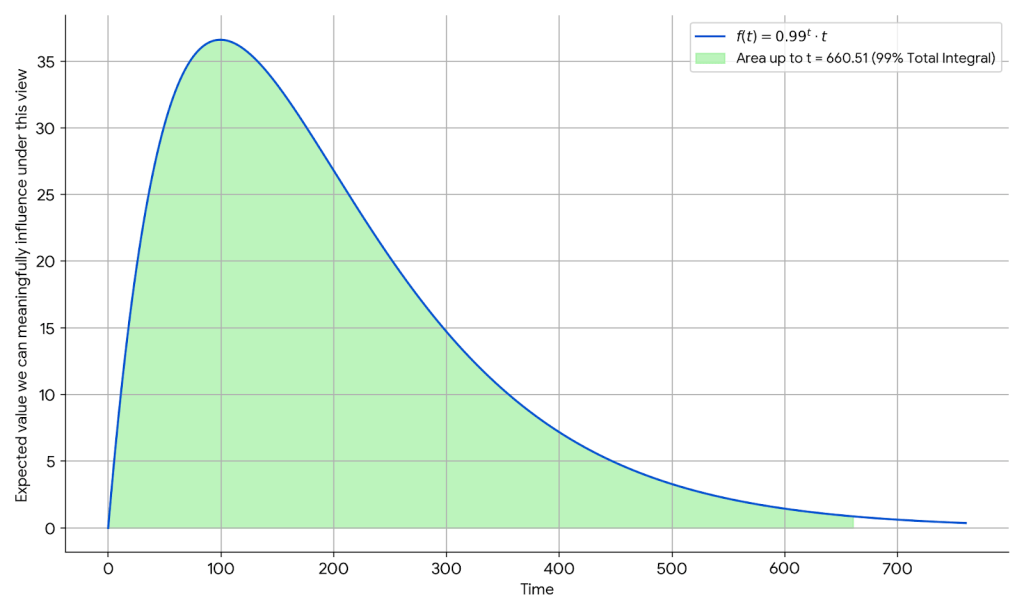
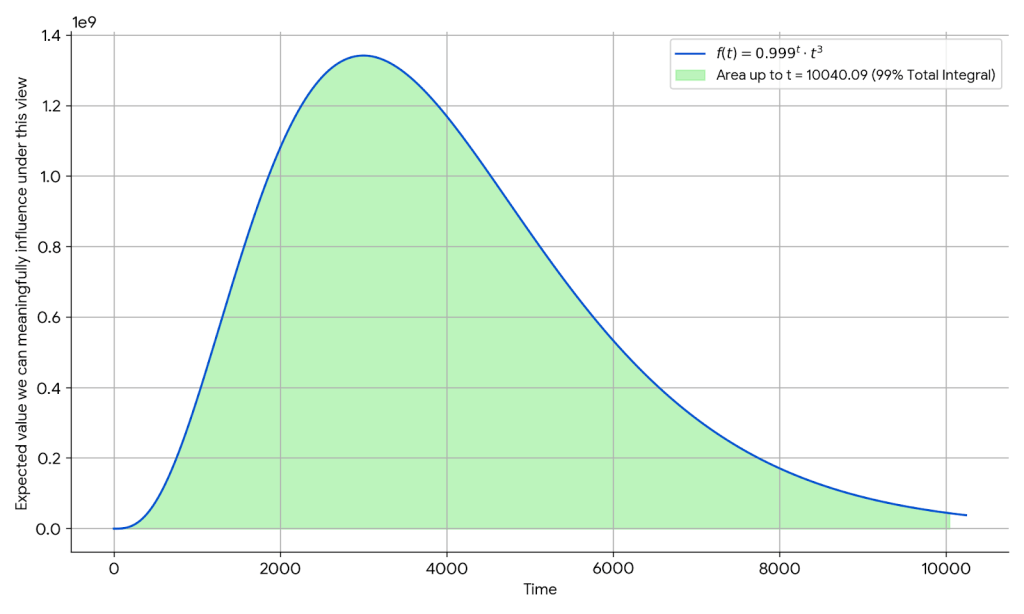




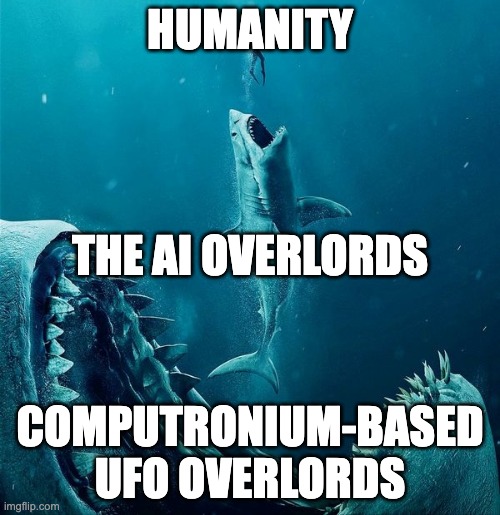







 Magnus Vinding