Priorities for reducing suffering: Reasons not to prioritize the Abolitionist Project

I discussed David Pearce’s Abolitionist Project in Chapter 13 of my book on Suffering-Focused Ethics. The chapter is somewhat brief and dense, and its main points could admittedly have been elaborated further and explained more clearly. This post seeks to explore and further explain some of these points.


A good place to start might be to highlight some of the key points of agreement between David Pearce and myself.

  • First and most important, we both agree that minimizing suffering should be our overriding moral aim.
  • Second, we both agree that we have reason to be skeptical about the possibility of digital sentience — and at the very least to not treat it as a foregone conclusion — which I note from the outset to flag that views on digital sentience are unlikely to account for the key differences in our respective views on how to best reduce suffering.
  • Third, we agree that humanity should ideally use biotechnology to abolish suffering throughout the living world, provided this is indeed the best way to minimize suffering.

The following is a summary of some of the main points I made about the Abolitionist Project in my book. There are four main points I would emphasize, none of which are particularly original (at least two of them are made in Brian Tomasik’s Why I Don’t Focus on the Hedonistic Imperative).

I.

Some studies suggest that people who have suffered tend to become more empathetic. This obviously does not imply that the Abolitionist Project is infeasible, but it does give us reason to doubt that abolishing the capacity to suffer in humans should be among our main priorities at this point.

To clarify, this is not a point about what we should do in the ideal, but more a point about where we should currently invest our limited resources, on the margin, to best reduce suffering. If we were to focus on interventions at the level of gene editing, other traits (than our capacity to suffer) seem more promising to focus on, such as increasing dispositions toward compassion. And yet interventions focused on gene editing may themselves not be among the most promising things to focus on in the first place, which leads to the next point.

II.

For even if we grant that the Abolitionist Project should be our chief aim, at least in the medium term, it still seems that the main bottleneck to its completion is found not at the technical level, but rather at the level of humanity’s values and willingness to do what would be required. I believe this is also a point that David and I mostly agree on, as he has likewise hinted, in various places, that the main obstacle to the Abolitionist Project will not be technical, but sociopolitical. This would give us reason to mostly prioritize the sociopolitical level on the margin — especially humanity’s values and willingness to reduce suffering. And the following consideration provides an additional reason in favor of the same conclusion.

III.

The third and most important point relates to the distribution of future (expected) suffering, and how we can best prevent worst-case outcomes. Perhaps the most intuitive way to explain this point is with an analogy to tax revenues: if one were trying to maximize tax revenues, one should focus disproportionately on collecting taxes from the richest people rather than the poorest, simply because that is where most of the money is.

The visual representation of the income distribution in the US in 2019 found below should help make this claim more intuitive.
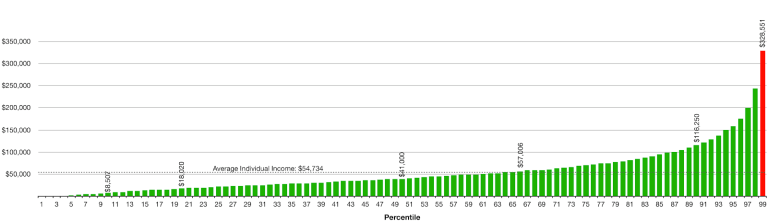


The point is that something similar plausibly applies to future suffering: in terms of the distribution of future (expected) suffering, it seems reasonable to give disproportionate focus to the prevention of worst-case outcomes, as they contain more suffering (in expectation).

Futures in which the Abolitionist Project is completed, and in which our advocacy for the Abolitionist Project helps bring on its completion, say, a century sooner, are almost by definition not the kinds of future scenarios that contain the most suffering. That is, they are not worst-case futures in which things go very wrong and suffering gets multiplied in an out-of-control fashion.

Put more generally, it seems to me that advocating for the Abolitionist Project is not the best way to address worst-case outcomes, even if we assume that such advocacy has a positive effect in this regard. A more promising focus, it seems to me, is again to increase humanity’s overall willingness and capacity to reduce suffering (the strategy that also seems most promising for advancing the Abolitionist Project itself). And this capacity should ideally be oriented toward the avoidance of very bad outcomes — outcomes that to me seem most likely to stem from bad sociopolitical dynamics.

IV.

Relatedly, a final critical point is that there may be some downsides to framing our goal in terms of abolishing suffering, rather than in terms of minimizing suffering in expectation. One reason is that the former framing may invoke our proportion bias, or what is known in the literature as proportion dominance: our tendency to intuitively care more about helping 10 out of 10 individuals rather than helping 10 out of 100, even though the impact is in fact the same.

Minimizing suffering in expectation would entail abolishing suffering if that were indeed the way to minimize suffering in expectation, but the point is that it might not be. For instance, it could be that the way to reduce the most suffering in expectation is to instead mostly focus on reducing the probability and mitigating the expected badness of worst-case outcomes. And framing our aim in terms of abolishing suffering, rather than the more general and neutral terms of minimizing suffering in expectation, can hide this possibility somewhat. (I say a bit more about this in Section 13.3 in my book; see also this section.)

Moreover, talking about the complete abolition of suffering can leave the broader aim of reducing suffering particularly vulnerable to objections — e.g. the objection that completely abolishing suffering seems risky in a number of ways. In contrast, the aim of reducing intense suffering is much less likely to invite such objections, and is more obviously urgent and worthy of priority. This is another strategic reason to doubt that the abolitionist framing is optimal.

Lastly, it would be quite a coincidence if the actions that maximize the probability of the complete abolition of suffering were also exactly those actions that minimize extreme suffering in expectation; even as these goals are related, they are by no means the same. And hence to the extent that our main goal is to minimize extreme suffering, we should probably frame our objective in these terms rather than in abolitionist terms.

Reasons in favor of prioritizing the Abolitionist Project

To be clear, there are also things to be said in favor of an abolitionist framing. For instance, many people will probably find a focus on the mere alleviation and reduction of suffering to be too negative and insufficiently motivating, leading them to disengage and drop out. Such people may find it much more motivating if the aim of reducing suffering is coupled with an inspiring vision about the complete abolition of suffering and increasingly better states of superhappiness.

As a case in point, I think my own focus on suffering was in large part inspired by the Abolitionist Project and the The Hedonistic Imperative, which gradually, albeit very slowly, eased my optimistic mind into prioritizing suffering. Without this light and inspiring transitional bridge, I may have remained as opposed to suffering-focused views as I was eight years ago, before I encountered David’s work.

Brian Tomasik writes something similar about the influence of these ideas: “David Pearce’s The Hedonistic Imperative was very influential on my life. That book was one of the key factors that led to my focus on suffering as the most important altruistic priority.”

Likewise, informing people about technologies that can effectively reduce or even abolish certain forms of suffering, such as novel gene therapies, may give people hope that we can do something to reduce suffering, and thus help motivate action to this end.

But I think the two reasons cited above count more as reasons to include an abolitionist perspective in our “communication portfolio”, as opposed to making it our main focus — not least in light of the four considerations mentioned above that count against the abolitionist framing and focus.

A critical question

The following question may capture the main difference between David’s view and my own.

In previous conversations, David and I have clarified that we both accept that the avoidance of worst-case outcomes is, plausibly, the main priority for reducing suffering in expectation.

This premise, together with our shared moral outlook, seems to recommend a strong focus on minimizing the risk of worst-case outcomes. The critical question is thus: What reasons do we have to think that prioritizing and promoting the Abolitionist Project is the single best way, or even among the best ways, to address worst-case outcomes?

As noted above, I think there are good reasons to doubt that advocating the Abolitionist Project is among the most promising strategies to this end (say, among the top 10 causes to pursue), even if we grant that it has positive effects overall, including on worst-case outcomes in particular.

Possible responses

Analogy to smallpox

A way to respond may be to invoke the example of smallpox: Eradicating smallpox was plausibly the best way to minimize the risk of “astronomical smallpox, as opposed to focusing on other, indirect measures. So why should the same not be true in the case of suffering?

I think this is an interesting line of argument, but I think the case of smallpox is disanalogous in at least a couple of ways. First, smallpox is in a sense a much simpler and more circumscribed phenomenon than is suffering. In part for this reason, the eradication of smallpox was much easier than the abolition of suffering would be. As an infectious disease, smallpox, unlike suffering, has not evolved to serve any functional role in animals. It could thus not only be eradicated more easily, but also without unintended effects on, say, the function of the human mind.

Second, if we were primarily concerned about not spreading smallpox to space, and minimizing “smallpox-risks” in general, I think it is indeed plausible that the short-term eradication of smallpox would not be the ideal thing to prioritize with marginal resources. (Again, it is important to here distinguish what humanity at large should ideally do versus what the, say, 1,000 most dedicated suffering reducers should do with most of their resources, on the margin, in our imperfect world.)

One reason such a short-term focus may be suboptimal is that the short-term eradication of smallpox is already — or would already be, if it still existed — prioritized by mainstream organizations and governments around the world, and hence additional marginal resources would likely have a rather limited counterfactual impact to this end. Work to minimize the risk of spreading life forms vulnerable to smallpox is far more neglected, and hence does seem a fairly reasonable priority from a “smallpox-risk minimizing” perspective.

Sources of unwillingness

Another response may be to argue that humanity’s unwillingness to reduce suffering derives mostly from the sense that the problem of suffering is intractable, and hence the best way to increase our willingness to alleviate and prevent suffering is to set out technical blueprints for its prevention. In David’s words, we can have a serious ethical debate about the future of sentience only once we appreciate what is — and what isn’t — technically feasible.

I think there is something to be said in favor of this argument, as noted above in the section on reasons to favor the Abolitionist Project. Yet unfortunately, my sense is that humanity’s unwillingness to reduce suffering does not primarily stem from a sense that the problem is too vast and intractable. Sadly, it seems to me that most people give relatively little thought to the urgency of (others’) suffering, especially when it comes to the suffering of non-human beings. As David notes, factory farming can be said to be “the greatest source of severe and readily avoidable suffering in the world today”. Ending this enormous source of suffering is clearly tractable at a collective level. Yet most people still actively contribute to it rather than work against it, despite its solution being technically straightforward.

What is the best way to motivate humanity to prevent suffering?

This is an empirical question. But I would be surprised if setting out abolitionist blueprints turned out to be the single best strategy. Other candidates that seem more promising to me include informing people about horrific examples of suffering, as well as presenting reasoned arguments in favor of prioritizing the prevention of suffering.

To clarify, I am not arguing for any efforts to conserve suffering. The issue here is rather about what we should prioritize with our limited resources. The following analogy may help clarify my view: When animal advocates argue in favor of prioritizing the suffering of farm animals or wild animals rather than, say, the suffering of companion animals, they are not thereby urging us to conserve let alone increase the suffering of companion animals. The argument is rather that our limited resources seem to reduce more suffering if we spend them on these other things, even as we grant that it is a very good thing to reduce the suffering of companion animals.

In terms of how we rank the cost-effectiveness of different causes and interventions (cf. this distribution), I would still consider abolitionist advocacy to be quite beneficial all things considered, and probably significantly better than the vast majority of activities that we could pursue. But I would not quite rank it at the tail-end of the cost-effectiveness distribution, for some of the reasons outlined above.


Effective altruism and common sense

Thomas Sowell once called Milton Friedman “one of those rare thinkers who had both genius and common sense”.

I am not here interested in Sowell’s claim about Friedman, but rather in his insight into the tension between abstract smarts and common sense, and particularly how it applies to the effective altruism (EA) community. For it seems to me that there sometimes is an unbalanced ratio of clever abstractions to common sense in EA discussions.

To be clear, my point is not that abstract ideas are unimportant, or even that everyday common sense should generally be favored over abstract ideas. After all, many of the core ideas of effective altruism are highly abstract in nature, such as impartiality and the importance of numbers, and I believe we are right to stand by these ideas. But my point is that common sense is underutilized as a sanity check that can prevent our abstractions from floating into the clouds. More generally, I seem to observe a tendency to make certain assumptions, and to do a lot of clever analysis and deductions based on those assumptions, but without spending anywhere near as much energy exploring the plausibility of these assumptions themselves.

Below are three examples that I think follow this pattern.

Boltzmann brains

A highly abstract idea that is admittedly intriguing to ponder is that of a Boltzmann brain: a hypothetical conscious brain that arises as the product of random quantum fluctuations. Boltzmann brains are a trivial corollary given certain assumptions: let some basic combinatorial assumptions hold for a set amount of time, and we can conclude that a lot of Boltzmann brains must exist in this span of time (at least as a matter of statistical certainty, similar to how we can derive and be certain of the second law of thermodynamics).

But this does not mean that Boltzmann brains are in fact possible, as the underlying assumptions may well be false. Beyond the obvious possibility that the lifetime of the universe could be too short, it is also conceivable that the combinatorial assumptions that allow a functioning 310 K human brain to emerge in ~ 0 K empty space do not in fact obtain, e.g. because it falsely assumes a combinatorial independence concerning the fluctuations that happen in each neighboring “bit” of the universe (or for some other reason). If any such key assumption is false, it could be that the emergence of a 310 K human brain in ~ 0 K space is not in fact allowed by the laws of physics, even in principle, meaning that even an infinite amount of time would never spontaneously produce a 310 K human Boltzmann brain.

Note that I am not claiming that Boltzmann brains cannot emerge in ~ 0 K space. My claim is simply that there is a big step from abstract assumptions to actual reality, and there is considerable uncertainty about whether the starting assumptions in question can indeed survive that step.

Quantum immortality

Another example is the notion of quantum immortality — not in the sense of merely surviving an attempted quantum suicide for improbably long, but in the sense of literal immortality because a tiny fraction of Everett branches continue to support a conscious survivor indefinitely.

This is a case where I think skeptical common sense and a search for erroneous assumptions is essential. Specifically, even granting a picture in which, say, a victim of a serious accident survives for a markedly longer time in one branch than in another, there are still strong reasons to doubt that there will be any branches in which the victim will survive for long. Specifically, we have good reason to believe that the measure of branches in which the victim survives will converge rapidly toward zero.

An objection might be that the measure indeed will converge toward zero, but that it never actually reaches zero, and hence there will in fact always be a tiny fraction of branches in which the victim survives. Yet I believe this rests on a false assumption. Our understanding of physics suggests that there is only — and could only be — a finite number of distinct branches, meaning that even if the measure of branches in which the victim survives is approximated well by a continuous function that never exactly reaches zero, the critical threshold that corresponds to a zero measure of actual branches with a surviving victim will in fact be reached, and probably rather quickly.

Of course, one may argue that we should still assign some probability to quantum immortality being possible, and that this possibility is still highly relevant in expectation. But I think there are many risks that are much less Pascallian and far more worthy of our attention.

Intelligence explosion

Unlike the two previous examples, this last example has become quite an influential idea in EA: the notion of a fast and local “intelligence explosion“.

I will not here restate my lengthy critiques of the plausibility of this notion (or the critiques advanced by others). And to be clear, I do not think the effective altruism community is at all wrong to have a strong focus on AI. But the mistake I think I do see is that there are many abstractly grounded assumptions pertaining to a hypothetical intelligence explosion that have received an insufficient amount of scrutiny from common sense and empirical data (Garfinkel, 2018 argues along similar lines).

I think part of the problem stems from the fact that Nick Bostrom’s book Superintelligence framed the future of AI in a certain way. Here, for instance, is how Bostrom frames the issue in the conclusion of his book (p. 319):

Before the prospect of an intelligence explosion, we humans are like small children playing with a bomb. … We have little idea when the detonation will occur, though if we hold the device to our ear we can hear a faint ticking sound. … Some little idiot is bound to press the ignite button just to see what happens.

I realize Bostrom is employing a metaphor here, and I realize that he assigns a substantial credence to many different future scenarios. But the way his book is framed is nonetheless mostly in terms of such a metaphorical bomb that could ignite an intelligence explosion (i.e. FOOM). And it seems that this kind of scenario in effect became the standard scenario many people assumed and worked on, with comparatively little effort going into the more fundamental question of how plausible this future scenario is in the first place. An abstract argument about (a rather vague notion of) “intelligence” recursively improving itself was given much weight, and much clever analysis focusing on this FOOM picture and its canonical problems followed.

Again, my claim here is not that this picture is wrong or implausible, but rather that the more fundamental questions about the nature and future of “intelligence” should be kept more alive, and that our approach to these questions should be more informed by empirical data, lest we misprioritize our resources.


In sum, our fondness for abstractions is plausibly a bias we need to control for. We can do this by applying common-sense heuristics to a greater extent, by spending more time considering how our abstract models might be wrong, and by making a greater effort to hold our assumptions up against empirical reality.

Antinatalism and reducing suffering: A case of suspicious convergence

First published: Feb. 2021. Last update: Dec. 2022


Two positions are worth distinguishing. One is the view that we should reduce (extreme) suffering as much as we can for all sentient beings. The other is the view that we should advocate for humans not to have children.

It may seem intuitive to think that the former position implies the latter. That is, to think that the best way to reduce suffering for all sentient beings is to advocate for humans not to have children. My aim in this brief essay is to outline some of the reasons to be skeptical of this claim.

Suspicious convergence

Lewis, 2016 warns of “suspicious convergence”, which he introduces with the following toy example:

Oliver: … Thus we see that donating to the opera is the best way of promoting the arts.

Eleanor: Okay, but I’m principally interested in improving human welfare.

Oliver: Oh! Well I think it is also the case that donating to the opera is best for improving human welfare too.

The general point is that, for any set of distinct altruistic aims or endeavors we may consider, we should be a priori suspicious of the claim that they are perfectly convergent — i.e. that directly pursuing one of them also happens to be the very best thing we can do for achieving the other. Justifying such a belief would require good, object-level reasons. And in the case of the respective endeavors of reducing suffering and advocating for humans not to procreate, we in a sense find the opposite, as there are good reasons to be skeptical of a strong degree of convergence, and even to think that such antinatalist advocacy might increase future suffering.

The marginal impact of antinatalist advocacy

A key point when evaluating the impact of altruistic efforts is that we need to think at the margin: how does our particular contribution change the outcome, in expectation? This is true whether our aims are modest or maximally ambitious — our actions and resources still represent but a very small fraction of the total sum of actions and resources, and we can still only exert relatively small pushes toward our goals.

Direct effects

What, then, is the marginal impact of advocating for people not to have children? One way to try to answer this question is to explore the expected effects of preventing a single human birth. Antinatalist analyses of this question are quick to point out the many harms caused by a single human birth, which must indeed be considered. Yet what these analyses tend not to consider are the harms that a human birth would prevent.

For example, in his book Better Never to Have Been, David Benatar writes about “the suffering inflicted on those animals whose habitat is destroyed by encroaching humans” (p. 224) — which, again, should definitely be included in our analysis. Yet he fails to consider the many births and all the suffering that would be prevented by an additional human birth, such as due to its marginal effects on habitat reduction (“fewer people means more animals“). As Brian Tomasik argues, when we consider a wider range of the effects humans have on animal suffering, “it seems plausible that encouraging people to have fewer children actually causes an increase in suffering and involuntary births.” 

This highlights how a one-sided analysis such as Benatar’s is deeply problematic when evaluating potential interventions. We cannot simply look at the harms prevented by our pet interventions without considering how they might lead to more harm. Both things must be considered.

To be clear, the considerations above regarding the marginal effects of human births on animal suffering by no means represent a complete analysis of the effects of additional human births, or of advocating for humans not to have children. But they do represent reasons to doubt that such advocacy is among the very best things we can do to reduce suffering for all sentient beings, at least in terms of the direct effects, which leads us to the next point.

Long-term effects

Some seem to hold that the main reason to advocate against human procreation is not the direct effects, but rather its long-term effects on humanity’s future. I agree that the influence our ideas and advocacy efforts have on humanity’s long-term future are plausibly the most important thing about them, and I think many antinatalists are likely to have a positive influence in this regard by highlighting the moral significance of suffering (and the relative insignificance of pleasure).

But the question is why we should think that the best way to steer humanity’s long-term future toward less suffering is to argue for people not to have children. After all, the space of possible interventions we could pursue to reduce future suffering is vast, and it would be quite a remarkable coincidence if relatively simple interventions — such as advocating for antinatalism or veganism — happened to be the very best way to reduce suffering, or even among the very best ways.

In particular, the greatest risk from a long-term perspective is that things somehow go awfully wrong, and that we counterfactually greatly increase future suffering, either by creating additional sources of suffering in the future, or by simply failing to reduce existing forms of suffering when we could. And advocating for people not to have children seems unlikely to be among the best ways to reduce the risk of such failures — again since the space of possible interventions is vast, and interventions that are targeted more directly at reducing these risks, including the risk of leaving wild-animal suffering unaddressed, are probably significantly more effective than is advocating for humans not to procreate.

Better alternatives?

If our aim is to reduce suffering for all sentient beings, a plausible course of action would be to pursue an open-ended research project on how we can best achieve this aim. This is, after all, not a trivial question, and we should hardly expect the most plausible answers to be intuitive, let alone obvious. Exploring this question requires epistemic humility, and forces us to contend with the vast amount of empirical uncertainty that we are facing.

I have explored this question at length in Vinding, 2020, as have other individuals and organizations elsewhere. One conclusion that seems quite robust is that we should focus mostly on avoiding bad outcomes, whereas comparatively suffering-free future scenarios merit less priority. Another robust conclusion is that we should pursue a pragmatic and cooperative approach when trying to reduce suffering (see also Vinding, 2020, ch. 10) — not least since future conflicts are one of the main ways in which worst-case outcomes might materialize, and hence we should generally strive to reduce the risk of such conflicts.

In more concrete terms, antinatalists may be more effective if they focus on defending antinatalism for wild animals in particular. This case seems both easier and more important to make given the overwhelming amount of suffering and early death in nature. Such advocacy may both have more beneficial near-term and long-term effects, being less at risk of increasing non-human suffering in the near term, and plausibly being more conducive to reducing worst-case risks, whether these entail spreading non-human life or simply failing to reduce wild-animal suffering.

Broadly speaking, the aim of reducing suffering would seem to recommend efforts to identify the main ways in which humanity might cause — or prevent — vast amounts of suffering in the future, and to find out how we can best navigate accordingly. None of these conclusions seem to support efforts to convince people not to have children as a particularly promising strategy, though they likely do recommend efforts to promote concern for suffering more generally.

Conversation with David Pearce about digital sentience and the binding problem

Whether digital sentience is possible would seem to matter greatly for our priorities, and so gaining even slightly more refined views on this matter could be quite valuable. Many people appear to treat the possibility, if not indeed the imminence, of digital sentience as a foregone conclusion. David Pearce, in contrast, is skeptical.

Pearce has written and spoken elaborately about his views on consciousness. My sense, however, is that these expositions do not always manage to clearly convey the core, and actually very simple reasons underlying Pearce’s skepticism of digital sentience. The aim of this conversation is to probe Pearce so as to shed greater — or perhaps most of all simpler — light on why he is skeptical, and thus to hopefully advance the discussions on this issue among altruists working to reduce future suffering.


MV: You are skeptical about the possibility of digital sentience. Could you explain why, in simple terms?

DP: Sure. Perhaps we can start by asking why so many people believe that our machines will become conscious (cf. https://www.hedweb.com/quora/2015.html#definition). Consciousness is widely recognised to be scientifically unexplained. But the computer metaphor of mind seems to offer us clues (cf. https://www.hedweb.com/quora/2015.html#braincomp). As far as I can tell, many if not most believers in digital sentience tend to reason along the following lines. Any well-defined cognitive task that the human mind can perform could also be performed by a programmable digital computer (cf. https://en.wikipedia.org/wiki/Turing_machine). A classical Turing machine is substrate-neutral. By “substrate-neutral”, we mean that whether a Turing machine is physically constituted of silicon or carbon or gallium oxide (etc) makes no functional difference to the execution of the program it runs. It’s commonly believed that the behaviour of a human brain can, in principle, be emulated on a classical Turing machine. Our conscious minds must be identical with states of the brain. If our minds weren’t identical with brain states, then dualism would be true (cf. https://www.hedweb.com/quora/2015.html#dualidealmat). Therefore, the behaviour of our minds can in principle be emulated by a digital computer. Moreover, the state-space of all possible minds is immense, embracing not just the consciousness of traditional and enhanced biological lifeforms, but also artificial digital minds and maybe digital superintelligence. Accordingly, the belief that non-biological information-processing machines can’t support consciousness is arbitrary. It’s unjustified carbon chauvinism.

I think most believers in digital sentience would recognise that the above considerations are not a rigorous argument for the existence of inorganic machine consciousness. The existence of machine consciousness hasn’t been derived from first principles. The “explanatory gap” is still unbridged. Yet what is the alternative?

Well, as a scientific rationalist, I’m an unbeliever. Digital computers and the software they run are not phenomenally-bound subjects of experience (cf. https://www.binding-problem.com/). Ascribing sentience to digital computers or silicon robots is, I believe, a form of anthropomorphic projection — a projection their designers encourage by giving their creations cutesy names (“Watson”, “Sophia”, “Alexa” etc). 

Before explaining my reasons for believing that digital computers are zombies, I will lay out two background assumptions. Naturally, one or both assumptions can be challenged, though I think they are well-motivated.

The first background assumption might seem scarcely relevant to your question. Perpetual direct realism is false (cf. https://www.hedweb.com/quora/2015.html#distort). Inferential realism about the external world is true. The subjective contents of your consciousness aren’t merely a phenomenally thin and subtle serial stream of logico-linguistic thought-episodes playing out behind your forehead, residual after-images when you close your eyes, inner feelings and emotions and so forth. Consciousness is also your entire phenomenal world-simulation — what naïve realists call the publicly accessible external world. Unless you have the neurological syndromes of simultanagnosia (the inability to experience more than one object at once) or akinetopsia (“motion blindness”), you can simultaneously experience a host of dynamic objects — for example, multiple players on a football pitch, or a pride of hungry lions. These perceptual objects populate your virtual world of experience from the sky above to your body-image below. Consciousness is all you directly know. The external environment is an inference, not a given.

Let’s for now postpone discussion of how our skull-bound minds are capable of such an extraordinary feat of real-time virtual world-making. The point is that if you couldn’t experience multiple feature-bound phenomenal objects — i.e. if you were just an aggregate of 86 billion membrane-bound neuronal “pixels” of experience — then you’d be helpless. Compare dreamless sleep. Like your enteric nervous system (the “brain-in-the-gut”), your mind-brain would still be a fabulously complex information-processing system. But you’d risk starving to death or getting eaten. Waking consciousness is immensely adaptive. (cf. https://www.hedweb.com/quora/2015.html#evolutionary). Phenomenal binding is immensely adaptive (cf. https://www.hedweb.com/quora/2015.html#purposecon).

My second assumption is physicalism (cf. https://www.hedweb.com/quora/2015.html#materialism). I assume the unity of science. All the special sciences (chemistry, molecular biology etc) reduce to physics. In principle, the behaviour of organic macromolecules such as self-replicating DNA can be described entirely in the mathematical language of physics without mentioning “life” at all, though such high-level description is convenient. Complications aside, no “element of reality” is missing from the mathematical formalism of our best theory of the world, quantum mechanics, or more strictly from tomorrow’s unification of quantum field theory and general relativity.

One corollary of physicalism is that only “weak” emergence is permissible. “Strong” emergence is forbidden. Just as the behaviour of programs running on your PC supervenes on the behaviour of its machine code, likewise the behaviour of biological organisms can in principle be exhaustively reduced to quantum chemistry and thus ultimately to quantum field theory. The conceptual framework of physicalism is traditionally associated with materialism. According to materialism as broadly defined, the intrinsic nature of the physical — more poetically, the mysterious “fire” in the equations — is non-experiential. Indeed, the assumption that quantum field theory describes fields of insentience is normally treated as too trivially obvious to be worth stating explicitly. However, this assumption of insentience leads to the Hard Problem of consciousness. Non-materialist physicalism (cf. https://www.hedweb.com/quora/2015.html#galileoserror) drops this plausible metaphysical assumption. If the intrinsic nature argument is sound, there is no Hard Problem of consciousness: it’s the intrinsic nature of the physical (cf. https://www.hedweb.com/quora/2015.html#definephysical ). However, both “materialist” physicalists and non-materialist physicalists agree: everything that happens in the world is constrained by the mathematical straitjacket of modern physics. Any supposedly “emergent” phenomenon must be derived, ultimately, from physics. Irreducible “strong” emergence would be akin to magic.

Anyhow, the reason I don’t believe in digital minds is that classical computers are, on the premises outlined above, incapable of phenomenal binding. If we make the standard assumption that their 1 and 0s and logic gates are non-experiential, then digital computers are zombies. Less obviously, digital computers are zombies if we don’t make this standard assumption! Imagine, fancifully, replacing non-experiential 1s and 0s of computer software with discrete “pixels” of experience. Run the program as before. The upshot will still be a zombie, more technically a micro-experiential zombie. What’s more, neither increasing the complexity of the code nor exponentially increasing the speed of its execution could cause discrete “pixels” somehow to blend into each other in virtue of their functional role, let alone create phenomenally-bound perceptual objects or a unitary self experiencing a unified phenomenal world. The same is true of a connectionist system (cf. https://en.wikipedia.org/wiki/Connectionism), supposedly more closely modelled on the brain — however well-connected and well-trained the network, and regardless whether its nodes are experiential or non-experiential. The synchronous firing of distributed feature-processors in a “trained up” connectionist system doesn’t generate a unified perceptual object — again on pain of “strong” emergence. AI programmers and roboticists can use workarounds for the inability of classical computers to bind, but they are just that: workarounds.

Those who believe in digital sentience can protest that we don’t know that phenomenal minds can’t emerge at some level of computational abstraction in digital computers. And they are right! If abstract objects have the causal power to create conscious experience, then digital computer programs might be subjects of experience. But recall we’re here assuming physicalism. If physicalism is true, then even if consciousness is fundamental to the world, we can know that digital computers are — at most — micro-experiential zombies.

Of course, monistic physicalism may be false. “Strong” emergence may be real. But if so, then reality seems fundamentally lawless. The scientific world-picture would be false.

Yet how do biological minds routinely accomplish binding if phenomenal binding is impossible for any classical digital computer (cf. https://en.wikipedia.org/wiki/Universal_Turing_machine). Even if our neurons support rudimentary “pixels” of experience, why aren’t animals like us in the same boat as classical digital computers or classically parallel connectionist systems?

I can give you my tentative answer. Naïvely, it’s the reductio ad absurdum of quantum mind: “Schrödinger’s neurons”: https://www.hedweb.com/quora/2015.html#quantumbrain.

Surprisingly, it’s experimentally falsifiable via interferometry: https://en.wikipedia.org/wiki/Quantum_mind#David_Pearce 

Yet the conjecture I explore may conceivably be of interest only to someone who already feels the force of the binding problem. Plenty of researchers would say it’s a ridiculous solution to a nonexistent problem. I agree it’s crazy; but it’s worth falsifying. Other researchers just lump phenomenal binding together with the Hard Problem (cf. https://www.hedweb.com/quora/2015.html#categorize) as one big insoluble mystery they suppose can be quarantined from the rest of scientific knowledge.

I think their defeatism and optimism alike are premature. 

MV: Thanks, David. A lot to discuss there, obviously.

Perhaps the most crucial point to really appreciate in order to understand your skepticism is that you are a strict monist about reality. That is, “the experiential” is not something over and above “the physical”, but rather identical with it (which, to be clear, does not imply that all physical things have minds, or complex experiences). And so if “the mental” and “the physical” are essentially the same ontological thing, or phenomenon, under two different descriptions, then there must, roughly speaking, also be a match in terms of their topological properties.

As Mike Johnson explained your view: “consciousness is ‘ontologically unitary’, and so only a physical property that implies ontological unity … could physically instantiate consciousness.” (Principia Qualia, p. 73). (Note that “consciousness” here refers to an ordered, composite mind; not phenomenality more generally.)

Conversely, a system that is physically discrete or disconnected — say, a computer composed of billiard balls that bump into each other, or lighthouses that exchange signals across hundreds of kilometers — could not, on your view, support a unitary mind. In terms of the analogy of thinking about consciousness as waves, your view is roughly that we should think of a unitary mind as a large, composite wave of sorts, akin to a song, whereas disconnected “pixels of experience” are like discrete microscopic proto-waves, akin to tiny disjoint blobs of sound. (And elsewhere you quote Seth Lloyd saying something similar about classical versus quantum computations: “A classical computation is like a solo voice — one line of pure tones succeeding each other. A quantum computation is like a symphony — many lines of tones interfering with one another.”)

This is why you say that “computer software with discrete ‘pixels’ of experience will still be a micro-experiential zombie”, and why you say that “even if consciousness is fundamental to the world, we can know that digital computers are at most micro-experiential zombies” — it’s because of this physical discreteness, or “disconnectedness”.

And this is where it seems to me that the computational view of mind is also starkly at odds with common sense, as well as with monism. For it seems highly counterintuitive to claim that billiard balls bumping into each other, or lighthouses separated by hundreds of kilometers that exchange discrete signals, could, even in principle, mediate a unitary mind. I wonder whether most people who hold a computational view of mind are really willing to bite this bullet. (Such views have also been elaborately criticized by Mike Johnson and Scott Aaronson — critiques that I have seen no compelling replies to.)

It also seems non-monistic in that it appears impossible to give a plausible account of where a unitary mind is supposed to be found in this picture (e.g. in a picture with discrete computations occurring serially over long distances), except perhaps as a separate, dualist phenomenon that we somehow map onto a set of physically discrete computations occurring over time, which seems to me inelegant and unparsimonious. Not to mention that it gives rise to an explosion of minds, as we can then see minds in a vast set of computations that are somehow causally connected across time and space, with the same computations being included in many distinct minds. This picture is at odds with a monist view that implies a one-to-one correspondence between concrete physical state and concrete mental state — or rather, which sees these two sides as distinct descriptions of the exact same reality.

The question is then how phenomenal binding could occur. You explore a quantum mind hypothesis involving quantum coherence. So what are your reasons for thinking that quantum coherence is necessary for phenomenal binding? Why would, say, electromagnetic fields in a synchronous state not be enough?

DP: If the phenomenal unity of mind is an effectively classical phenomenon, then I have no idea how to derive the properties of our phenomenally bound minds from decohered, effectively classical neurons — not even in principle, let alone in practice. 

MV: And why is that? What is it that makes deriving the properties of our phenomenally bound minds seem feasible in the case of coherent states, unlike in the case of decohered ones?

DP: Quantum coherent states are individual states — i.e. fundamental physical features of the world — not mere unbound aggregates of classical mind-dust. On this story, decoherence (cf. https://arxiv.org/pdf/1911.06282.pdf) explains phenomenal unbinding.

MV: So it is because only quantum coherent states could constitute the “ontological unity” of a unitary, “bound” mind. Decoherent states, on your view, are not and could not be ontologically unitary in the required sense?

DP: Yes!

Digital computing depends on effectively classical, decohered individual bits of information, whether as implemented in Turing’s original tape set-up, a modern digital computer, or indeed if the world’s population of skull-bound minds agree to participate in an experiment to see if a global mind can emerge from a supposed global brain.

One can’t create perceptual objects, let alone unified minds, from classical mind-dust even if strictly the motes of decohered “dust” are only effectively classical, i.e. phase information has leaked away into the environment. If the 1s and 0s of a digital computer are treated as discrete micro-experiential pixels, then when running a program, we don’t need to consider the possibility of coherent superpositions of 1s and 0s/ micro-experiences. If the bits weren’t effectively classical and discrete, then the program wouldn’t execute.

MV: In other words, you are essentially saying that binding/unity between decohered states is ultimately no more tenable than binding/unity between, say, two billard balls separated by a hundred miles? Because they are in a sense similarly ontologically separate?

DP: Yes!

MV: So to summarize, your argument is roughly the following: 

  1. observed phenomenal binding, or a unitary mind, combined with 
  2. an empirically well-motivated monistic physicalism, means that
  3. we must look for a unitary physical state as the “mediator”, or rather the physical description, of mind [since the ontological identity from (2) implies that the phenomenal unity from (1) must be paralleled in our physical description], and it seems that
  4. only quantum coherent states could truly fit the bill of such ontological unity in physical terms.

DP: 1 to 4, yes!

MV: Cool. And in step 4 in particular, to spell that out more clearly, the reasoning is roughly that classical states are effectively (spatiotemporally) serial, discrete, disconnected, etc. Quantum coherent states, in contrast, are a connected, unitary, individual whole.

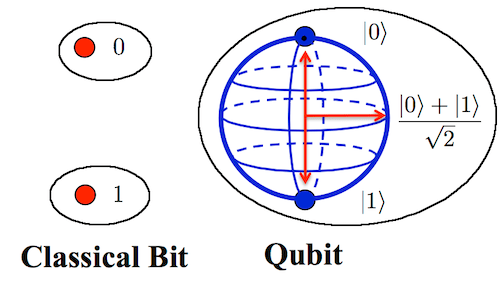
Classical bits in a sense belong to disjoint “ontological sets”, whereas qubits belong to the same “ontological set” (as I’ve tried to illustrate somewhat clumsily below, and in line with Seth Lloyd’s quote above).

Is that a fair way to put it?

DP: Yes!

I sometimes say who will play Mendel to Zurek’s Darwin is unknown. If experience discloses the intrinsic nature of the physical, i.e. if non-materialist physicalism is true, then we must necessarily consider the nature of experience at what are intuitively absurdly short timescales in the CNS. At sufficiently fine-grained temporal resolutions, we can’t just assume the existence of decohered macromolecules, neurotransmitters, receptors, membrane-bound neurons etc. — they are weakly emergent, dynamically stable patterns of “cat states”. These high-level patterns must be derived from quantum bedrock — which of course I haven’t done. All I’ve done is make a “philosophical” conjecture that (1) quantum coherence mediates the phenomenal unity of our minds; and (2) quantum Darwinism (cf. https://www.sciencemag.org/news/2019/09/twist-survival-fittest-could-explain-how-reality-emerges-quantum-haze) offers a ludicrously powerful selection-mechanism for sculpting what would otherwise be mere phenomenally-bound “noise”.

MV: Thanks for that clarification.

I guess it’s also worth stressing that you do not claim this to be any more than a hypothesis, while you at the same time admit that you have a hard time seeing how alternative accounts could explain phenomenal binding.

Moreover, it’s worth stressing that the conjecture resulting from your line of reasoning above is in fact, as you noted, a falsifiable one — a rare distinction for a theory of consciousness.

A more general point to note is that skepticism about digital sentience need not be predicated on the conjecture you presented above, as there are other theories of mind — not necessarily involving quantum coherence — that also imply that digital computers are unable to mediate a conscious mind (including some of the theories hinted at above, and perhaps other, more recent theories). For example, one may accept steps 1-3 in the argument above, and then be more agnostic in step 4, with openness to the possibility that binding could be achieved in other ways, yet while still considering contemporary digital computers unlikely to be able to mediate a unitary mind (e.g. because of the fundamental architectural differences between such computers and biological brains).

Okay, having said all that, let’s now move on to a slightly different issue. Beyond digital sentience in particular, you have also expressed skepticism regarding artificial sentience more generally (i.e. non-digital artificial sentience). Can you explain the reasons for this skepticism?

DP: Well, aeons of posthuman biological minds probably lie ahead. They’ll be artificial — genetically rewritten, AI-augmented, most likely superhumanly blissful, but otherwise inconceivably alien to Darwinian primitives. My scepticism is about the supposed emergence of minds in classical information processors — whether programmable digital computers, classically parallel connectionist systems or anything else.

What about inorganic quantum minds? Well, I say a bit more e.g. here: https://www.hedweb.com/quora/2015.html#nonbiological

A pleasure-pain axis has been so central to our experience that sentience in everything from worms to humans is sometimes (mis)defined in terms of the capacity to feel pleasure and pain. But essentially, I see no reason to believe that such (hypothetical) phenomenally bound consciousness in future inorganic quantum computers will support a pleasure-pain axis any more than, say, the taste of garlic.

In view of our profound ignorance of physical reality, however, I’m cautious: this is just my best guess!

MV: Interesting. You note that you see no reason to believe that such systems would have a pleasure-pain axis. But what about the argument that pain has proven exceptionally adaptive over the course of biological evolution, and might thus plausibly prove adaptive in future forms of evolution as well (assuming things won’t necessarily be run according to civilized values)? 

DP: Currently, I can’t see any reason to suppose hedonic tone (or the taste of garlic) could be instantiated in inorganic quantum computers. If (a big “if”) the quantum-theoretic version of non-materialist physicalism is true, then subjectively it’s like something to be an inorganic quantum computer, just as it’s like something subjectively to be superfluid helium — a nonbiological macro-quale. But out of the zillions of state-spaces of experience, why expect the state-space of phenomenally-bound experience that inorganic quantum computers hypothetically support will include hedonic tone? My guess is that futuristic quantum computers will instantiate qualia for which humans have no name nor conception and with no counterpart in biological minds.

All this is very speculative! It’s an intuition, not a rigorous argument.

MV: Fair enough. What then is your view of hypothetical future computers built from biological neurons?

DP: Artificial organic neuronal networks are perfectly feasible. Unlike silicon-based “neural networks” — a misnomer in my view — certain kinds of artificial organic neuronal networks could indeed suffer. Consider the reckless development of “mini-brains”.

MV: Yeah, it should be uncontroversial that such developments entail serious risks.

Okay, David. What you have said here certainly provides much food for thought. Thanks a lot for patiently exploring these issues with me, and not least for all your work and your dedication to reducing the suffering of all sentient beings.

DP: Thank you, Magnus. You’re very kind. May I just add a recommendation? Anyone who hasn’t yet done so should read your superb Suffering-Focused Ethics (2020).

Two biases relevant to expected AI scenarios

My aim in this essay is to briefly review two plausible biases in relation to our expectations of future AI scenarios. In particular, these are biases that I think risk increasing our estimates of the probability of a local, so-called FOOM takeoff.

An important point to clarify from the outset is that these biases, if indeed real, do not in themselves represent reasons to simply dismiss FOOM scenarios. It would clearly be a mistake to think so. But they do, I submit, constitute reasons to be somewhat more skeptical of them, and to re-examine our beliefs regarding FOOM scenarios. (Stronger, more direct reasons to doubt FOOM have been reviewed elsewhere.)

Egalitarian intuitions looking for upstarts

The first putative bias has its roots in our egalitarian origins. As Christopher Boehm argues in his Hierarchy in the Forrest, we humans evolved in egalitarian tribes in which we created reverse dominance hierarchies to prevent domineering individuals from taking over. Boehm thus suggests that our minds are built to be acutely aware of the potential for any individual to rise and take over, perhaps even to the extent that we have specialized modules whose main task is to be attuned to this risk.

Western “Great Man” intuitions

The second putative bias is much more culturally contingent, and should be expected to be most pronounced in Western (“WEIRD“) minds. As Joe Henrich shows in his book The WEIRDest People in the World, Western minds are uniquely focused on individuals, so much so that their entire way of thinking about the world tends to revolve around individuals and individual properties (as opposed to thinking in terms of collectives and networks, which is more common among East Asian cultures).

The problem is that this Western, individualist mode of thinking, when applied straightforwardly to the dynamics of large-scale societies, is quite wrong. For while it may be mnemonically pragmatic to recount history, including the history of ideas and technology, in terms of individual actions and decisions, the truth is usually far more complex than this individualist narrative lets on. As Henrich argues, innovation is largely the product of large-scale systemic factors (such as the degree of connectedness between people), and these factors are usually far more important than is any individual, suggesting that Westerners tend to strongly overestimate the role that single individuals play in innovation and history more generally. Henrich thus alleges that the Western way of thinking about innovation reflects an “individualism bias” of sorts, and further notes that:

thinking about individuals and focusing on them as having dispositions and kind of always evaluating everybody [in terms of which] attributes they have … leads us to what’s called “the myth of the heroic inventor”, and that’s the idea that the great advances in technology and innovation are the products of individual minds that kind of just burst forth and give us these wonderful inventions. But if you look at the history of innovation, what you’ll find time after time was that there was lucky recombinations, people often invent stuff at the same time, and each individual only makes a small increment to a much larger, longer process.

In other words, innovation is the product of numerous small and piecemeal contributions to a much greater extent than Western “Great Man” storytelling suggests. (Of course, none of this is to say that individuals are unimportant, but merely that Westerners seem likely to vastly overestimate the influence that single individuals have on history and innovation.)

Upshot

If we have mental modules specialized to look for individuals that accumulate power and take control, and if we have expectations that roughly conform to this pattern in the context of future technology, with one individual entity innovating its way to a takeover, it seems that we should at least wonder whether this expectation may derive partly from our forager-age intuitions rather than resting purely on solid epistemics. Especially when this view of the future seems in strong tension with our actual understanding of innovation. This understanding being that innovation — contra Western intuition — is distributed, with increases in abilities generally the product of countless “small” insights and tools rather than a few big ones.

Both of the tendencies listed above lead us (or in the second case, mostly Westerners) to focus on individual agents rather than larger, systemic issues that may be crucial to future outcomes, yet which are less intuitively appealing for us to focus on. And there may well be more general explanations for this lack of appeal than just the two reasons listed above. The fact that there were no large-scale systemic issues of any kind for almost all of our species’ history renders it unsurprising that we are not particularly prone to focus on such issues (except for local signaling purposes).

Perhaps we need to control for this, and try to look more toward systemic issues than we are intuitively inclined to do. After all, the claim that the future will be dominated by AI systems in some form need not imply that the best way to influence that future is to focus on individual AI systems, as opposed to broader, institutional issues.

Suffering-focused ethics and the importance of happiness

It seems intuitive to think that suffering-focused moral views imply that it is unimportant whether people live fulfilling lives. Yet the truth, I will argue, is in many ways the opposite — especially for those who are trying to reduce suffering effectively with their limited resources.

Personal sustainability and productivity

One reason in favor of living fulfilling lives is that we cannot work to reduce suffering in sustainable ways otherwise. Indeed, not only is a reasonably satisfied mind a precondition for sustainable productivity in the long run, but also for our productivity on a day-to-day basis, which is often aided by a strong passion and excitement about our work projects. Suffering-focused ethics by no means entails that excitement and passion should be muted.

Beyond aiding our productivity in work-related contexts, a strong sense of well-being also helps us be more resilient in the face of life’s challenges — things that break, unexpected expenses, unfriendly antagonists, etc. Cultivating a sense of fulfillment and a sound mental health can help us better handle these obstacles as well.

Signaling value

This reason pertains to the social rather than the individual level. If we are trying to create change in the world, it generally does not help if we ourselves are miserable. People often decide whether they want to associate with (or distance themselves from) a group of people based on perceptions of the overall wellness and mental health of its adherents. And this is not entirely unreasonable, as these factors arguably do constitute some indication of the practical consequences of associating with the group in question.

If failing to prioritize our own well-being has bad consequences in the bigger picture, such as scaring people away from joining our efforts to create a better future, then this failure is not recommended by consequentialist suffering-focused views.

To be clear, my point here is not that suffering-focused agents should be deceptive and try to display a fake and inflated sense of well-being (such deception would likely have many bad consequences). Rather, the point is that we have good reasons to cultivate genuine physical and mental health, both for the sake of our personal productivity and our ability to inspire others.

A needless hurdle to the adoption of suffering-focused views

A closely related point has to do with people’s evaluations of suffering-focused views more directly (as opposed to the evaluations of suffering-focused communities and individuals). People are likely to judge the acceptability of a moral view based in part on the expected psychological consequences of its adoption — will it enable me to pursue the lifestyle I want, to maintain my social relationships, and to seem like a good and likeable person?

Indeed, modern moral and political psychology suggests that these social and psychological factors are strong determinants of our moral and political views, and that we usually underestimate just how much these “non-rationalist” factors influence our views (see e.g. Haidt, 2012, part III; Tuschman, 2013, ch. 22; Simler, 2016; Tooby, 2017).

This is then another good reason to seek to both emphasize and exemplify the compatibility of suffering-focused views and a healthy and fulfilling life. Again, if failing in this regard tends to prevent people from prioritizing the reduction of suffering, then a true extrapolation of suffering-focused views will militate against such a failure, and instead recommend a focus on cultivating an invitingly healthful state of mind.

In sum, there is no inherent tension between living a healthy and fulfilling life and at the same time being committed to reducing the most intense forms of suffering.

Underappreciated consequentialist reasons to avoid consuming animal products

While there may be strong deontological or virtue-ethical reasons to avoid consuming animal products (“as far as is possible and practicable”), the consequentialist case for such avoidance is quite weak.

Or at least this appears to be a common view in some consequentialist-leaning circles. My aim in this post is to argue against this view. On a closer look, we find many strong consequentialist reasons to avoid the consumption of animal products.

The direct effects on the individuals we eat

99 percent of animals raised for food in the US, and more than 90 percent globally, live out their lives on factory farms. These are lives of permanent confinement to very small spaces, often involving severe abuse, as countless undercover investigations have revealed. And their slaughter frequently involves extreme suffering as well — for example, about a million chickens and turkeys are boiled alive in the US every year, and fish, the vast majority of farmed vertebrates, are usually slaughtered without any stunning. They are routinely suffocated to death, frozen to death, and cut in ways that leave them to bleed to death (exsanguination). 

Increasing such suffering via one’s marginal consumption is bad on virtually all consequentialist views. And note that, empirically, it turns out that people who aspire to avoid meat from factory farmed animals (“conscientious omnivores”) actually often do not (John & Sebo, 2020, 3.2; Rothgerber, 2015). And an even greater discrepancy between ideals and actuality is found in the behavior of those who believe that the animals they eat are “treated well”, which in the US is around 58 percent of people, despite the fact that over 99 percent of farm animals in the US live on factory farms (Reese, 2017).

Furthermore, even in Brian Tomasik’s analyses that factor in the potential of animal agriculture to reduce wild-animal suffering, the consumption of virtually all animal “products” is recommended against — including eggs and meat from fish (farmed and wild-caught), chickens, pigs, and (especially) insects. Brian argues that the impact of not consuming meat is generally positive, both because of the direct marginal impact (“avoiding eating one chicken or fish roughly translates to one less chicken or fish raised and killed”) and because of the broader social effects (more on the latter below).

The above is an important consequentialist consideration against consuming animal products. Yet unfortunately, consequentialist analyses tend to give far too much weight to this consideration alone, and to treat it as the end-all be-all of consequentialist arguments against consuming animal products when, in fact, it is not necessarily even one of the most weighty arguments.

Institutional effects

Another important consideration has to do with the institutional effects of animal consumption. These effects seem superficially similar to those discussed in the previous point, yet they are in fact quite distinct.

Anti-charity

For one, there is the increased financial support to an industry that not only systematically harms currently existing individuals, but which also, perhaps more significantly, actively works to undermine moral concern for future non-human individuals. It does this through influential lobbying activities and by advertising in ways that effectively serve as propaganda against non-human animals (that is certainly what we would call it in the human case if an industry continually worked to legitimize the exploitation and killing of certain human individuals; in fact, “propaganda” may be overly euphemistic).

Supporting this industry can be seen as anti-charity of sorts, as it pushes us away from betterment for non-human animals at the level of our broader institutions. And this effect could well be more significant than the direct marginal impact on non-human beings consumed, as such institutional factors may be a greater determinant of how many such beings will suffer in the future.

Not only are these institutional effects negative for future farmed animals, but the resulting reinforcement of speciesism and apathy toward non-human animals in general likely also impedes concern for wild animals in particular. And given the numbers, this effect may be even more important than the negative effect on future farmed animals.

Anti-activism

Another institutional effect is that, when we publicly buy or consume animal products, we signal to other people that non-human individuals can legitimately be viewed as food, and that we approve of the de facto horrific institution of animal agriculture. This signaling effect is difficult to avoid even if we do not in fact condone most of the actual practices involved. After all, virtually nobody condones the standard practices, such as the castration of pigs without anesthetics. And yet virtually all of us still condone these practices behaviorally, and indeed effectively support their continuation.

In this way, publicly buying or consuming animal products can, regardless of one’s intentions, end up serving as miniature anti-activism against the cause of reducing animal suffering — it serves to normalize a collectively perpetrated atrocity — while choosing to forego such products can serve as miniature activism in favor of the cause.

One may object that the signaling effects of such individual actions are insignificant. Yet we are generally not inclined to say the same about the signaling effects of, say, starkly racist remarks, even when the individuals whom the remarks are directed against will never know about them (e.g. when starkly anti-black sentiments are shared in forums with white people only). The reason, I think, is that we realize that such remarks do have negative effects down the line, and we realize that these effects are not minor.

It is widely acknowledged that, to human psychology, racism is a ticking bomb that we should make a consistent effort to steer away from, lest we corrode our collective attitudes and in turn end up systematically exploiting and harming certain groups of individuals. We have yet to realize that the same applies to speciesism.

For a broader analysis of the social effects of the institution of animal exploitation, see (John & Sebo, 2020, 3.3). Though note that I disagree with John and Sebo’s classical utilitarian premise, which would allow us to farm individuals, and even kill them in the most horrible ways, provided that their lives were overall “net positive” (the horrible death included). I think this notion of “net positive” needs to be examined at length, especially in the interpersonal context where some beings’ happiness is claimed to outweigh the extreme suffering of others.

Influence on our own perception

The influence on our own attitudes and thinking is another crucial factor. Indeed, for a consequentialist trying to think straight about how to prioritize one’s resources for optimal impact, this may be the most important reason not to consume animal products.

Moral denigration is a well-documented effect

Common sense suggests that we cannot think clearly about the moral status of a given group of individuals as long as we eat them. Our evolutionary history suggests the same: it was plausibly adaptive in our evolutionary past to avoid granting any considerable moral status to individuals categorized as “food animals”.

Psychological studies bear out common sense and evolution-based speculation. In Don’t Mind Meat? The Denial of Mind to Animals Used for Human Consumption, Brock Bastian and colleagues demonstrated that people tend to ascribe diminished mental capacities to “food animals”; that “meat eaters are motivated to deny minds to food animals when they are reminded of the link between meat and animal suffering”; and that such mind denial is increased when people expect to eat meat in the near future.

Another study (Bratanova et al., 2011) found that:

categorization as food — but not killing or human responsibility — was sufficient to reduce the animal’s perceived capacity to suffer, which in turn restricted moral concern.

This finding is in line with the prevalence of so-called consistency effects, our psychological tendency to adapt beliefs that support our past and present behavior (see Salamon & Rayhawk’s Cached Selves and Huemer, 2010, “5.d Coherence bias”). For example, “I eat animals, and hence animals don’t suffer so much and don’t deserve great moral consideration”. 

And yet another study (Loughnan et al., 2010) found that the moral numbing effects of meat eating applied to other non-human animals as well, suggesting that these numbing effects may extend to wild animals:

Eating meat reduced the perceived obligation to show moral concern for animals in general and the perceived moral status of the [animal being eaten].

(See also Jeff Sebo’s talk A utilitarian case for animal rights and John & Sebo, 2020, 3.2.)

These studies confirm a point that a number of philosophers have been trying to convey for a while (see John & Sebo, 2020, 3.2 for a brief review). Here is Peter Singer in Practical Ethics (as quoted in ibid.):

it would be better to reject altogether the killing of animals for food, unless one must do so to survive. Killing animals for food makes us think of them as objects that we can use as we please …

And such objectification, in turn, has horrendous consequences. This is usually quite obvious in the human case: few people are tempted to claim that it would be inconsequential if we began eating a given group of humans, even if we stipulated that these humans had the same mental abilities as, say, pigs. Singer’s point about objectification is obvious to most people in this case, and most consequentialists would probably say that raising, killing, and eating humans could only be recommended by very naive and incomplete consequentialist analyses detached from the real world — not least the realities of human psychology. Yet the same ought to be concluded when the beings in question possess not just the minds but also the bodies of pigs.

Relatedly, in the hypothetical case where systematic exploitation of certain humans is the norm, few consequentialists would be tempted to say that abstention from the consumption of human products (e.g. human body parts or forcefully obtained breast milk) is insignificant, or say that it is not worth sticking with it because other things are more important. For on reflection, when we put on the more sophisticated consequentialist hat, we realize that such abstention probably is an important component of the broader set of actions that constitutes the ethically optimal path forward. The same ought to be concluded, I submit, in the non-human case.

Note, finally, that even if we believed ourselves to be exceptions to all of the psychological tendencies reviewed above — a belief we should be skeptical of given the prevalence of illusory superiority — it would still be hypocritical and a failure of integrity if we ourselves did not follow a norm that we would recommend others to follow. And consequentialists have good reasons to show high integrity.

Self-serving biases

This is more of a meta consideration suggesting that 1) we should be skeptical of convenient conclusions, and 2) we should adhere to stricter principles than a naive consequentialist analysis might imply.

A good reason to adhere to reasonably strict principles is that, if we loosen our principles and leave everything up for case-by-case calculation, we open the door for biases to sneak in.

As Jamie Mayerfeld writes in Suffering and Moral Responsibility (p. 121):

An agent who regarded [sound moral principles] as mere rules of thumb would ignore them whenever she calculated that compliance wasn’t necessary to minimize the cumulative badness of suffering. The problem is that it might also be in her own interest to violate these principles, and self-interest could distort her calculations, even when she calculated sincerely. She could thus acquire a pattern of violating the principles even when compliance with them really was necessary to prevent the worst cumulative suffering. To avoid this, we would want her to feel strongly inhibited from violating the principles. Inhibitions of this kind can insulate agents from the effect of biased calculations.

And there are indeed many reasons to think that our “calculations” are strongly biased against concern for non-human individuals and against the conclusion that we should stop consuming them. For example, there is the fact that people who do not consume animal products face significant stigma — for example, one US study found that people tended to evaluate vegans more negatively than other minority groups, such as atheists and homosexuals; “only drug addicts were evaluated more negatively than vegetarians and vegans”. And a recent study suggested that fear of stigmatization is among the main reasons why people do not want to stop eating animal products. Yet fear of stigmatization is hardly, on reflection, a sound moral reason to eat animal products.

A more elaborate review of relevant biases can be found in (Vinding, 2018, “Bias Alert: We Should Expect to Be Extremely Biased”; Vinding, 2020, 11.5).

Human externalities

Defenses of the consumption of non-human individuals often rest on strongly anthropocentric values (which cannot be justified). But even on such anthropocentric terms, a surprisingly strong case can in fact be made against animal consumption given the negative effects animal agriculture has on human health — effects that individual consumption will also contribute to on the margin.

First, as is quite salient these days, animal agriculture significantly increases the risk of zoonotic diseases. Many of the most lethal diseases of the last century were zoonotic diseases that spread to humans due to animal agriculture and/or animal consumption, including the 1918 flu (50-100 million deaths), AIDS (30-40 million deaths), the Hong Kong flu (1-4 million deaths), and the 1957-1958 flu (1-4 million deaths). The same is true of the largest epidemics so far in this century, such as SARS, Ebola, COVID-19, and various bird and swine flus.

As noted in (Babatunde, 2011):

A remarkable 61 percent of all human pathogens, and 75 percent of new human pathogens, are transmitted by animals, and some of the most lethal bugs affecting humans originate in our domesticated animals.

Antibiotic resistance is another health problem exacerbated by animal agriculture. Each year in the US, more than 35,000 people die from antibiotic-resistant infections, which is more than twice the annual number of US gun homicides. And around 80 percent of all antibiotics used in the US are given to non-human animals — often simply to promote growth rather than to fight infections. In other words, animal agriculture is a key contributor to antibiotic resistance.

The environmental effects of animal agriculture represent another important factor, or rather set of factors. There is pollution — “ammonia pollution linked to U.S. farming may impose human health costs that are greater than the profits earned by agricultural exports”. There are greenhouse gases contributing significantly to climate change. There is nitrate contamination of the groundwater from manure:

The EPA found that nitrates are the most widespread agricultural contaminant in drinking water wells and estimates that 4.5 million people [in the US] are exposed to elevated nitrate levels from drinking water wells. Nitrates, if they find their way into the groundwater, can potentially be fatal to infants.

Beyond the environmental effects, there are also significant health risks associated with the direct consumption of animal products, including red meat, chicken meat, fish meat, eggs and dairy. Conversely, significant health benefits are associated with alternative sources of protein, such as beans, nuts, and seeds. This is relevant both collectively, for the sake of not supporting industries that actively promote poor human nutrition in general, as well as individually, to maximize one’s own health so one can be more effectively altruistic.

A more thorough review of the human costs of animal agriculture are found in (Vinding, 2014, ch. 2).

In sum, one could argue that we also have a strong obligation to our fellow humans to avoid contributing to the various human health problems and risks caused by animal agriculture.

Both/And

What I have said above may seem in tension with the common consequentialist critique that says that animal advocates focus too much on individual consumer behavior. Yet in reality, there is no tension. It is both true, I submit, that avoiding the consumption of animal products is important (in purely consequentialist terms) and that most animal advocates focus far too much on individual consumer change compared to institutional change and wild-animal suffering. The latter point does not negate the former (the same view is expressed in John & Sebo, 2020, 3.3).

When Machines Improve Machines

The following is an excerpt from my book Reflections on Intelligence (2016/2024).


The term “Artificial General Intelligence” (AGI) refers to a machine that can perform any cognitive task at least as well as any human. This is often considered the holy grail of artificial intelligence research. It is also what many believe will give rise to an “intelligence explosion”, as machines will then be able to take over the design of smarter machines, and hence their further development will no longer be held back by the slowness of humans.

A Radical Shift?

Luke Muehlhauser and Anna Salamon describe the transition toward machines designing machines in the following way:

Once human programmers build an AI with a better-than-human capacity for AI design, the instrumental goal for self-improvement may motivate a positive feedback loop of self-enhancement. Now when the machine intelligence improves itself, it improves the intelligence that does the improving. (Muehlhauser & Salamon, 2012, p. 13)

While this might seem like a radical shift, software engineer Ramez Naam has argued that it is less radical than we might think, since we already use our latest technology to improve on itself and build the next generation of technology (Naam, 2010). As noted in the previous chapter, the way new tools are built and improved is by means of an enormous conglomerate of tools, and newly developed tools tend to become an addition to this existing set of tools. In Naam’s words:

[A] common assertion is that the advent of greater-than-human intelligence will herald The Singularity. These super intelligences will be able to advance science and technology faster than unaugmented humans can. They’ll be able to understand things that baseline humans can’t. And perhaps most importantly, they’ll be able to use their superior intellectual powers to improve on themselves, leading to an upward spiral of self improvement with faster and faster cycles each time.

In reality, we already have greater-than-human intelligences. They’re all around us. And indeed, they drive forward the frontiers of science and technology in ways that unaugmented individual humans can’t.

These superhuman intelligences are the distributed intelligences formed of humans, collaborating with one another, often via electronic means, and almost invariably with support from software systems and vast online repositories of knowledge. (Naam, 2010)

The design and construction of new machines is not the product of human ingenuity alone, but instead the product of a large system of advanced tools in which human ingenuity is just one component, albeit a component that plays many roles. Moreover, as Naam hints, superhuman intellectual abilities already play a crucial role in this design process. For example, computer programs make illustrations and calculations that no human could possibly make, and these have become indispensable components in the design of new tools in virtually all technological domains. In this way, superhuman intellectual abilities are already a significant part of the process of building superhuman intellectual abilities. This has led to continued growth, yet hardly an abrupt intelligence explosion.

Naam gives a specific example of an existing self-improving “superintelligence” (i.e. a super goal achiever), namely Intel:

Intel employs giant teams of humans and computers to design the next generation of its microprocessors. Faster chips mean that the computers it uses in the design become more powerful. More powerful computers mean that Intel can do more sophisticated simulations, that its CAD (computer aided design) software can take more of the burden off of the many hundreds of humans working on each chip design, and so on. There’s a direct feedback loop between Intel’s output and its own capabilities. …

Self-improving superintelligences have changed our lives tremendously, of course. But they don’t seem to have spiraled into a hard takeoff towards “singularity”. On a percentage basis, Google’s growth in revenue, in employees, and in servers have all slowed over time. It’s still a rapidly growing company, but that growth rate is slowly decelerating, not accelerating. The same is true of Intel and of the bulk of tech companies that have achieved a reasonable size. Larger typically means slower growing.

My point here is that neither superintelligence nor the ability to improve or augment oneself always lead to runaway growth. Positive feedback loops are a tremendously powerful force, but in nature (and here I’m liberally including corporate structures and the worldwide market economy in general as part of ‘nature’) negative feedback loops come into play as well, and tend to put brakes on growth. (Naam, 2010)

I quote Naam at length here because he makes this important point well, and because he is an expert with experience in the pursuit of using technology to make better technology. In addition to Naam’s point about Intel and other large tech companies that effectively improve themselves, I would add that although such mega-companies are highly competent collectives, they still only constitute a tiny part of the larger collective system that is the world economy, which they each contribute modestly to, and which they are entirely dependent upon.

A Familiar Dynamic

It has always been the latest, most advanced tools that, combined with the already existing set of tools, have collaborated to build the latest, most advanced tools. The expected “machines building machines” revolution is therefore not as revolutionary as it might seem at first sight. Strong versions of the “once machines can program AI better than humans” argument seem to assume that human software engineers are by far the main bottleneck to progress in the construction of more competent machines, which is a questionable premise. But even if it were true, and if we suddenly had a million times as many agents working to create better software, other bottlenecks would soon emerge, such as hardware production and energy. Essentially, we would be returned to the task of advancing our entire economy, something that pretty much all humans and machines are participating in already, knowingly or not.

The question concerning whether “intelligence” can explode is therefore basically: can the economy explode? To which we can answer that rapid increases in the growth rate of the world economy certainly have occurred in the past, and some argue that this is likely to happen again in the future (Hanson 1998; 2016). However, recent trends in economic growth, as well as in hardware growth in particular, give us some reason to be skeptical of such a future growth explosion (see e.g. Vinding, 2021; 2022).


See also Chimps, Humans, and AI: A Deceptive Analogy.

Consciousness: Orthogonal or Crucial?

The following is an excerpt from my book Reflections on Intelligence (2016/2024).


A question that is often considered open, sometimes even irrelevant, when it comes to “AGIs” and “superintelligences” is whether such entities would be conscious. Here is Nick Bostrom expressing such a sentiment:

By a “superintelligence” we mean an intellect that is much smarter than the best human brains in practically every field, including scientific creativity, general wisdom and social skills. This definition leaves open how the superintelligence is implemented: it could be a digital computer, an ensemble of networked computers, cultured cortical tissue or what have you. It also leaves open whether the superintelligence is conscious and has subjective experiences. (Bostrom, 2012, “Definition of ‘superintelligence’”)

Yet this is hardly true. If a system is “more capable than the best human brains in practically every field, including scientific creativity, general wisdom, and social skills”, the question of consciousness is highly relevant. Consciousness is integral to much of what we do and excel at, and thus if an entity is not conscious, it cannot outperform the best humans “in practically every field”, especially not in “general wisdom” and “scientific creativity”. Let us look at these in turn.

General Wisdom

A core aspect of “general wisdom” is to be wise about ethical issues. Yet being wise about ethical issues requires that one can consider and evaluate questions like the following in an informed manner:

  • Is there anything about the experience of suffering that makes its reduction a moral priority
  • Does anything about the experience of suffering justify the claim that reducing suffering has greater moral priority than increasing happiness (for the already happy)?
  • Is there anything about states of extreme suffering that make their reduction an overriding moral priority?

It seems that one would have to be conscious in order to explore and answer such questions in an informed way. That is, one would have to know what such experiences are like in order to understand their experiential properties and significance. Knowing what a term like “suffering” refers to — i.e. knowing what actual experiences of suffering are like — is thus crucial for informed ethical reflection.

The same point holds true about other areas of philosophy that bear on wisdom, such as the philosophy of mind: without knowing what it is like to have a conscious mind, one cannot contribute much to the discussion about what it is like to have one and to the exploration of different modes of consciousness. Indeed, an unconscious entity has no genuine understanding about what the issue of consciousness is even about in the first place (Pearce, 2012a; 2012b).

So both in ethics and in the philosophy of mind, an unconscious entity would be less than clueless about many of the deepest questions at hand. If an entity not only fails to surpass humans in these areas, but fails to even have the slightest clue about what we are talking about, it hardly surpasses the best humans in practically every field. After all, questions about the phenomenology of consciousness are also relevant to many other fields, including psychology, epistemology, and ontology.

In short, experiencing and reasoning about consciousness is a key part of “human abilities”, and hence an entity that is unable to do this cannot be claimed to outperform humans in the most important, much less all, human abilities (see also Pearce, 2012a; 2012b).

Scientific Creativity

Another ability mentioned above that an unconscious entity could supposedly outdo humans at is scientific creativity. Yet scientific creativity must relate to all fields of knowledge, including the science of the conscious mind itself. This is also a part of the natural world, and a most relevant one at that.

Experiencing and accurately reporting what a given state of consciousness is like is essential for the science of mind, yet an unconscious entity obviously cannot do such a thing, as there is no experience it can report from. It cannot display any genuine scientific creativity, or even produce mere observations, in the direct exploration of consciousness.

Compassionate Free Speech

Two loose currents appear to be in opposition in today’s culture. One is animated by a strong insistence on empathy and compassion as core values, the other by a strong insistence on free speech as a core value. These two currents are often portrayed as though they must necessarily be in conflict. I think this is a mistake.

To be sure, the two values described above can be in tension, and none of them strictly imply the other. But it is possible to reconcile them in a refined and elegant synthesis. That, I submit, is what we should be aiming for. A synthesis of two vital and mutually reinforcing values.

Definitions and outline

It is crucial to distinguish 1) social and ethical norms, and 2) state-enforced laws. The argument I make here pertains to the first level. That is, I am arguing that we should aim to observe and promote ethical norms of compassion and open conversation, respectively.

What do I mean by these terms? Compassion is commonly defined as “sympathetic consciousness of others’ distress together with a desire to alleviate it”. I here use the term in a broader sense that also covers related virtues such as understanding, charitable interpretation, and kindness.

By norms of open conversation, or free expression, I mean norms that enable people to express their honest views openly, even when these views are controversial and uncomfortable. These norms do not entail that speech should be wholly unrestricted; after all, virtually everyone agrees that defamation and incitements to commit severe crimes should be illegal, as they commonly are.

My view is that we should roughly think of these two broad values as prima facie duties: we should generally strive to observe norms of compassion and open conversation, except in (rare) cases where other duties or virtues override these norms.

Below is a short defense of these two respective values, highlighting their importance in their own right. This is followed by a case that these values are not only compatible, but indeed strongly complementary. Finally, I explore what I see as some of the causes of our current state of polarization, and suggest five heuristics that might be useful going forward.

Brief defenses

Free speech

There are many strong arguments in favor of free speech. A famous collection of such arguments is On Liberty (1859) by John Stuart Mill, whose case for free speech is primarily based on the harm principle: the only reason power can legitimately be exercised over any individual against their will is to prevent harm to others.

This principle is intuitively compelling, although it leaves it unspecified what exactly counts as a harm to others. That is perhaps the main crux in discussions about free speech, and this alone could provide an argument in favor of free and open expression. For how can we clarify what should count as sufficient harm to others to justify the exercise of power if not through open discussion?

A necessary corrective to biased, fallible minds

Another important argument Mill makes in favor of free speech is based not merely on the rights of the speaker, but in equal part on the rights of the would-be listeners, who are also robbed by the suppression of free expression:

[T]he peculiar evil of silencing the expression of an opinion is, that it is robbing the human race; posterity as well as the existing generation; those who dissent from the opinion, still more than those who hold it. If the opinion is right, they are deprived of the opportunity of exchanging error for truth: if wrong, they lose, what is almost as great a benefit, the clearer perception and livelier impression of truth, produced by its collision with error.

In essence, Mill argues that, contrary to the annoyance we may instinctively feel, we should in fact be grateful for having our cherished views challenged, not least because it can help clarify and update our views.

Today, Mill’s argument can be further bolstered by a host of well-documented psychological biases. We now know that we are all vulnerable to confirmation bias, the bandwagon effect, groupthink, etc. These biases make it all too easy for us to deceive ourselves into thinking that we already possess the whole truth, although we most certainly do not. Consequently, if we want to hold reasonable beliefs, we should welcome and appreciate those who challenge the pitfalls of our groupish minds — pitfalls that we may otherwise be content to embrace.

After all, how can we know that our attempts to protect ourselves from hearing views that we dislike are not essentially unconscious attempts to protect our own confirmation bias? Free and open conversation is our best debiasing tool.

Strategic reasons

An altogether different argument in favor of honoring principles of free speech is that a failure to do so is strategically unwise. Indeed, as free-speech defender Noam Chomsky argues, there are several reasons to consider the suppression of free speech a tactical error if we are trying to create a better society.

First, reinforcing a norm of suppressing speech can have the unintended consequence of leading all sides, and perhaps eventually governments, to consider it increasingly legitimate to suppress certain forms of speech. “If they can suppress speech, why shouldn’t we?” The effects of such a regression would be worst for those who lack power.

Second, seeking to suppress speech is likely to backfire and to strengthen the other side, by making that side look more appealing than it in fact is — the suppressed becomes alluring — and by making the side that seeks to suppress speech look unreasonable, as though they are unable to muster a defense of their views.

When people try to make us do something, we tend to react negatively and to distance ourselves, even if we agreed with them from the outset (cf. psychological reactance). This is another strong reason against suppressing free expression, and against giving people the impression that they are not allowed to discuss or think certain things. It is human nature to react by asserting one’s freedom in defiance, even if it means voting for a president that one would otherwise have voted against. (See also Cialdini, 1984/2021, ch. 7.)

(Weak norms of free expression are thus a democratic problem in more than one way: it can keep citizens from voting in accordance with their ideal preferences both by making them ill-informed and by provoking votes of defiance.)

Steven Pinker has made a related point: if we place certain issues beyond the bounds of acceptable discourse, many people are likely to seek out discussion of these issues from unsavory sources, which can in turn put people on a path toward extreme and uncompassionate views. This parallels one of the main arguments made against the prevailing drug laws of today: such restrictions merely push the whole business into an underground market where people get dangerously polluted goods.

As Ayishat Akanbi eloquently put it (paraphrased slightly): if we suppress ideas, they will “operate with insidious undertones”, and we in effect “push people into the arms of extremism.”

Compassion

I will let my defense of compassion be even briefer still, as I have already made an elaborate defense of it in my book Suffering-Focused Ethics: Defense and Implications.

The short case is this: Suffering, especially the most intense suffering, truly matters. It is truly bad and truly worth preventing. Consequently, a desire to alleviate intense suffering is simply the most sensible response. Only a failure to connect with the reality of suffering can leave us apathetic. That is the simplest and foremost reason why compassion is of paramount importance.

Another reason to be compassionate, including in the broader sense of being kind and understanding, is that such an attitude has great instrumental benefits at the level of our communication and relations: it fosters trust and cooperation, which in turn enables win-win interactions.

However, to say that we should be compassionate is not to say that we should be game-theoretically naive in the sense of kindly allowing others to walk all over us. Compassion is wholly compatible with, and indeed mandates, tit for tat and assertiveness in the face of transgressions.

Lastly, it is worth emphasizing that compassion and empathy are not partisan values. Empathy is a human universal, and compassion has been considered a virtue in all major world traditions, as well as in most political movements, including political conservatism. Indeed, people of all political orientations score high on the harm/care dimension in Jonathan Haidt’s moral foundations framework. It really is a value on which people show uniquely wide agreement, at least on reflection. When they are not on Twitter.

Compassion and free speech: Complementary values

As noted above, the two values I defend here do not strictly imply each other, at least in some purely theoretical sense. But they are strongly complementary in many regards.

How free speech aids compassion

Compassion and the compassionate project can be aided by free speech in various ways. For example, to alleviate and prevent suffering effectively with our limited resources, we need to be able to discuss controversial ideas. We need to be able to discuss and measure different values and priorities against each other, including values that many people consider sacred and hence offensive to discuss.

As a case in point, in my book Suffering-Focused Ethics, I defend the moral primacy of reducing extreme suffering, even above other values that many people may consider sacred, and I further discuss the difficult question of which causes we should prioritize so as to best reduce extreme suffering. My arguments will no doubt be deeply offensive and infuriating to many, and I believe a substantial number of people would like to see my ideas suppressed if they could. This is not, of course, unique to my views: all treatises and positions on ethics are bound to be deemed too offensive and too dangerous by some.

This highlights the importance of free speech for ethics in general, and for the project of reducing suffering in particular. To conduct this most difficult conversation about what matters and what our priorities should be, we need a culture that allows, indeed promotes, this conversation — not a culture that stifles it. People who want to reduce suffering should thus have a strong interest in preserving and advancing free speech norms.

Another way in which free speech aids compassion is that, put simply, encouraging the free expression of, and listening to, each others’ underlying grievances can help us build mutual understanding, and in turn enable us to address our problems in cooperative ways. As Noam Chomsky notes in the context of hateful ideologies:

If you have a festering sore, the cure is not to irritate it, but to find out what its roots are and where it comes from, and to deal with those. Racist and other such speech is a festering sore. By silencing it, you simply amplify its appeal, and even lend it a veneer of respectability, as in fact we’ve seen very clearly in the last couple of years. And what has to be done, plainly, is to confront it, and to ask where it comes from, and to try to deal with the roots of such ideas. That’s the way to extirpate the ugliness and evil that lies behind such phenomena.

Human rights activist Deeyah Khan similarly argues that a root source of white supremacy is often a sense of fear and lack of opportunity, not inherent evil or apathy. She contends that the best solution to extremist ideologues is generally to engage in conversation and to seek to understand, not to shut down the conversation. (I recommend watching Khan’s documentary White Right: Meeting the Enemy.)

So while compassion per se does not directly imply free speech at some purely theoretical level, I would argue that a sophisticated and fully extrapolated version of compassion and the compassionate project does necessitate strong norms of free and open expression at the practical level.

How compassion aids free speech

One of the ways in which compassion can aid open conversation is exemplified in Deeyah Khan’s documentary mentioned above: she sits down and listens to white nationalists, seeking to understand them with compassion, which allows them to identify and express their own underlying issues, such as feelings of fear, vulnerability, and unworthiness. Such things can be difficult to share in apathetic and antagonistic environments, be they the macho ingroup or the angry outgroup. “Fuck you, racist” does not quite invite a response of “I’m afraid and hurting” as much as does, “How are you feeling, and what really motivates you?” On the contrary, it probably just serves to reinforce the facade of the pain.

We may not usually think of conditions that further the sharing of our underlying worries and vulnerabilities as a matter of free speech, perhaps because we all help perpetuate norms that suppress honesty about these things. But if free speech norms are essentially about enabling us to dare express our honest perspectives, then our de facto suppression of our inmost worries and vulnerabilities is indeed a free speech issue — and a rather consequential one at that (as I think Khan’s White Right makes clear). Compassion may well be the best remedy we have to our truth-subduing culture of suppressing our core worries and vulnerabilities.

A related way in which compassion, specifically the virtue of charitable interpretation, is important for free speech is, quite simply, that we suffocate free speech in its absence. If people hold back from expressing a nuanced view because they know that they will be strawmanned and vilely attacked based on bad-faith misinterpretations, then the state of free expression will be poor indeed.

In contrast, free expression will flourish when we do the opposite: when everyone engages with the strongest version of their opponents’ view — i.e. steelmans it — so that people feel positively motivated to present nuanced views and arguments in the expectation of being critiqued in good faith.

That, needless to say, is far from the state we are currently in.

Why we fail so spectacularly today

We are currently witnessing a primitive tribal dynamic exacerbated by the fact that we inhabit a treacherous environment to which we are not yet adapted, neither biologically nor culturally. I am speaking, of course, of the environment of screen-to-screen interaction.

Yet we should be clear that values and politics were never easy spheres to navigate in the first place. They have always been minefields. Politics is a notorious mind-killer for deep evolutionary reasons, and our political behavior is often more about signaling our group affiliations than it is about creating good policies. This is true not just of the “other side”; it is true of all of us, though we remain largely unaware of and self-deceived about it.

Thus, our predicament is that most of us care deeply about loyalty signaling, and such signaling has now become dangerously inflated. Moreover, we often use beliefs, ostensibly all about tracking reality, as ornaments that signal our group loyalty.

A hostage crisis instilling false assumptions

The two loose social currents I mentioned in the introduction can, I submit, be understood in this light. Specifically, values centered on empathy and compassion have become an ornament of sorts that signals loyalty to one side, while values centered on free speech have become a loyalty signal to another side. To be clear, I am not saying that these values are merely ornaments; they clearly are not. A value can be an ornament displayed with pride and be sincerely held at the same time. Yet our natural inclination to signal group loyalty can lead us to only express our support for one of these values, and to underemphasize the “opposing” value, even if we in fact do favor it.

In this way, the values of compassion and free speech have to some extent become hostages in a primitive tribal game, which in turn gives the false impression that there must be some deep conflict between these values, and that people must choose one or the other, as opposed to these values being, as I have argued, strongly complementary (with occasional and comparatively minor tensions).

The upshot is that supporters of free speech may feel nudged to display insensitivity in order to signal their loyalty and consistency, while supporters of anti-discrimination may feel nudged to oppose free speech.

Uncharitable claims beyond belief

A sad feature of this dynamic, and something that helps fuel it further, is how incredibly uncharitable the outer flanks of these two tribal currents are toward the other side.

“The PC-policing SJWs don’t care about the hard facts and just want to suppress them.”

“The free speech bros don’t care about minorities and just want to oppress them.”

To say that people are failing to steelman here would be quite the understatement. Indeed, this barely even qualifies as a strawman. It is more like the scream-man version of the other side: the worst, most scary version of the other side’s position that one could come up with. And this scream-man is repeatedly rehearsed in the partitioned echo halls of Twitter to the extent that people start believing these preposterously uncharitable narratives about the Scary Other.

It is a tragedy of the commons phenomenon: people are gleefully rewarded in their ingroup each time they promulgate the scream-man representation of the other side, and so it feels right to do so for individuals in these respective groups. But in the bigger picture, it just leaves everyone much worse off.

Distributions and the importance of self-criticism

To be sure, there are serious problems with significant numbers of people who conform too closely to the cartoon descriptions above. But a crucial point is that we must think in terms of statistical distributions. Specifically, the most loud-mouthed and scary two percent of the “other side” — a minority that tends to get a disproportionate amount of attention — should not be taken to represent everyone on that “side”, let alone its most reasonable representatives.

That being said, it is also true that many people on both sides tend to be bad at criticizing the harmful tendencies of their own “team”. There does indeed appear to be a tendency among certain defenders of free speech to fail to criticize and condemn those who discriminate against minorities. Likewise, there really does seem to be a tendency among certain progressives to fail to criticize and condemn those who suppress discussions of contentious issues.

This failure to speak out against the worst elements of one’s “own side” with sufficient force can create the false impression that most people on “our” side actually agree with these worst elements. That is how damning it is that we fail to criticize the transparent excesses of our ingroup in clear terms.

At cross-purposes

A problem with our failure to be charitable and to think in terms of distributions is that people end up talking past each other: both sides tend to criticize a strawman version of the other side based on the rabid tail-end elements of that side, which most people on the other side really do disagree with (although they may, as mentioned above, fail to express this disagreement with sufficient clarity).

This frequently results in debates with two sides that are in large part talking at cross-purposes: one side mostly defends free speech, while the other side mostly defends anti-discrimination, as though these were necessarily in great conflict. The failure to explore the compatibility and mutual complementarity of these values is striking.

The perils of screen-to-screen interaction

As noted above, our current mode of interaction only aggravates our political imbecility. When engaged in face-to-face interaction, we naturally relate to and empathize with the person before us, and we have a strong interest in keeping our interaction cordial so as to prevent it from escalating into conflict.

In screen-to-screen interaction, by contrast, our circuits for interpersonal interaction are all but inert, as we find ourselves shielded off from salient feedback and danger. Social media is road rage writ large. It is a road rage that renders it extra difficult to be charitable, and which renders it far more tempting to paint the outgroup in a bad light than it could ever be in a face-to-face environment, where preposterous strawmen would be called out and challenged in real time.

As a study on political polarization on Twitter put it:

Many messages contain sentiments more extreme than you would expect to encounter in face-to-face interactions, and the content is frequently disparaging of the identities and views associated with users across the partisan divide.

How can we reduce these unfortunate tendencies? The age of social media calls for new norms of communication.

Better norms for screen communication

Human culture has adapted to technological changes before, and it seems that we have no choice but to do the same today, in the face of our current state of cultural maladaptation. The following are five heuristics, or norms, that I think are likely to be useful in this regard.

1. The face-to-face heuristic

In light of the above, it seems sensible to adopt the precept of communicating online in roughly the same way we would communicate face-to-face. Our skills in face-to-face interaction have deep biological and cultural bases, and hence this heuristic is a cheap way to tap into a well-honed toolbox for functional human communication.

One effect of employing this heuristic will likely be a reduction of sarcastic and taunting comments. Such comments are rarely useful for taking our conversations to the next level, as we tend to realize face-to-face.

2. The nuance heuristic

As I argue in my defense of nuance, much of the tension that we see today could likely be lessened greatly if we adopted more nuanced perspectives, such as by acknowledging grains of truth in different viewpoints, and by representing beliefs in terms of graded credences rather than posturing with overconfident all-or-nothing certainties.

3. The steelman heuristic

I have already mentioned this, but it can hardly be stressed enough: we must strive to be charitable and to steelman the views of our opponents, especially since our road-rage-behind-the-screen predicament makes it easier than ever to do the opposite.

Whenever we summarize and criticize the views of the other side, we should stop and ask ourselves: Is this really the most honest statement of their views that I can muster, let alone the strongest one? If I think their view is painfully stupid, do I really fully understand it? Do I really know what it entails and the best arguments that support it?

4. Compassion for the outgroup

As noted above, compassion really is a consensus value, if ever there were one. The disagreement mostly arises when it comes to which individuals we should extend our compassion to. Both of the notional “sides”, or social currents, described here suffer from selective compassion: they generally fail to show sufficient compassion and respect for the other side, which renders productive conversation difficult. And this point needs to be stressed with unique fervor today, as screens are an all too powerful and insidious catalyst for outgroup apathy.

5. Criticizing the ingroup

Condemning the excesses of one’s (vaguely associated) ingroup is also uniquely important today. Why? Because we now see large numbers of people behaving badly on social media, and our intuitions are statistically illiterate: we do not intuitively understand how a faction endorsing a certain view or behavior can simultaneously be large in number and constitute but a small minority of a given group. The world is big, and we mostly do not understand that (at an intuitive level).

Only by publicly countering the excesses of our “ingroup” can we make it clear to the other side — and perhaps also to our own side — that the extremists truly are a disapproved minority. Such ingroup criticism seems paramount if we are to mitigate the ongoing trend of polarization.

Conclusion

We have created a polarized online society in which people can feel pushed toward a needlessly narrow set of values — compassion or free speech, choose one! We are pushed in this way, not by totalitarian laws, but by modes of communication to which we are not yet adapted, and which we are navigating with patently defunct norms.

Norms are often more important than laws. After all, most of us can think of judgments from our peers that would be worse than a minor prison sentence. Hence, totalitarian laws are not required for free expression to be stifled into a de facto draconian state. The notion that harshly punitive norms do not restrict speech in costly ways is naive.

Sure, we should be free to judge others based on the things they say. But just how harshly should we judge people for discussing controversial views? And do we understand the risks and the strategic costs associated with such judgments, let alone the risks of trying to suppress certain viewpoints? If we place ourselves in opposition to free speech, and then give people the ultimatum of siding either with “us” or with “them”, a lot of people are going to choose the other side, even if that side has features they find genuinely worrying.

I have tried to argue that the choice between free speech or compassion is a false one. It really is possible to chart a balanced middle path of a free and compassionate society.

Blog at WordPress.com.

Up ↑